Free tools
Know your numbers
Four quick tools our coaches use as a starting point. No sign-up, nothing stored.
Daily energy
How much your body uses in a day
Your resting number is what you burn doing nothing at all. The daily number adds how active you are.
At rest
·
In a typical day
·
BMI
·
Fill in height, weight and age to see your numbers. BMI cannot tell muscle from fat, so if you train it reads high. Treat both numbers as a rough guide, not a target.
| BMI | Weight status |
|---|---|
| Below 18.5 | Underweight |
| 18.5 to 24.9 | Healthy |
| 25 to 29.9 | Overweight |
| 30 and above | Obese |
Calories and BMI say what you weigh, not what you need. A complimentary assessment with a coach does.
Strength
Your one-rep max, without lifting it
Enter a weight you lifted and how many reps you managed. We estimate the most you could lift once, and the weights to train with.
Estimated one-rep max
·
An estimate from a set of 3 to 10 reps is the most reliable. Never test a true one-rep max without a coach beside you.
The number tells you where you are. Your coach turns it into a plan that fits your body.
Protein
How much protein you actually need
Most people are fine at breakfast and lunch, then dinner lands at about ten grams. This is the daily range, and what it looks like on a plate.
A day
·
Per meal, at the top of the range
·
Spread it across the day rather than loading it into one meal. Protein does no harm to healthy kidneys, but if you have kidney disease, ask your GP before you change anything.
Knowing the number is the easy part. Getting it in without eating chicken and rice every night is the bit we help with.
Three tests at home
Your own numbers to beat
You need a wall, a floor and a timer. We do not score you against anybody else, and we do not pretend there is an official table for how long you should hold a wall sit, because there is not one. Write your number down, then beat it next month.
The wall sit
Back flat against a wall, slide down until your knees are bent to a right angle and your thighs are parallel to the floor. Start a timer and hold. Stop when your form goes, not when it burns.
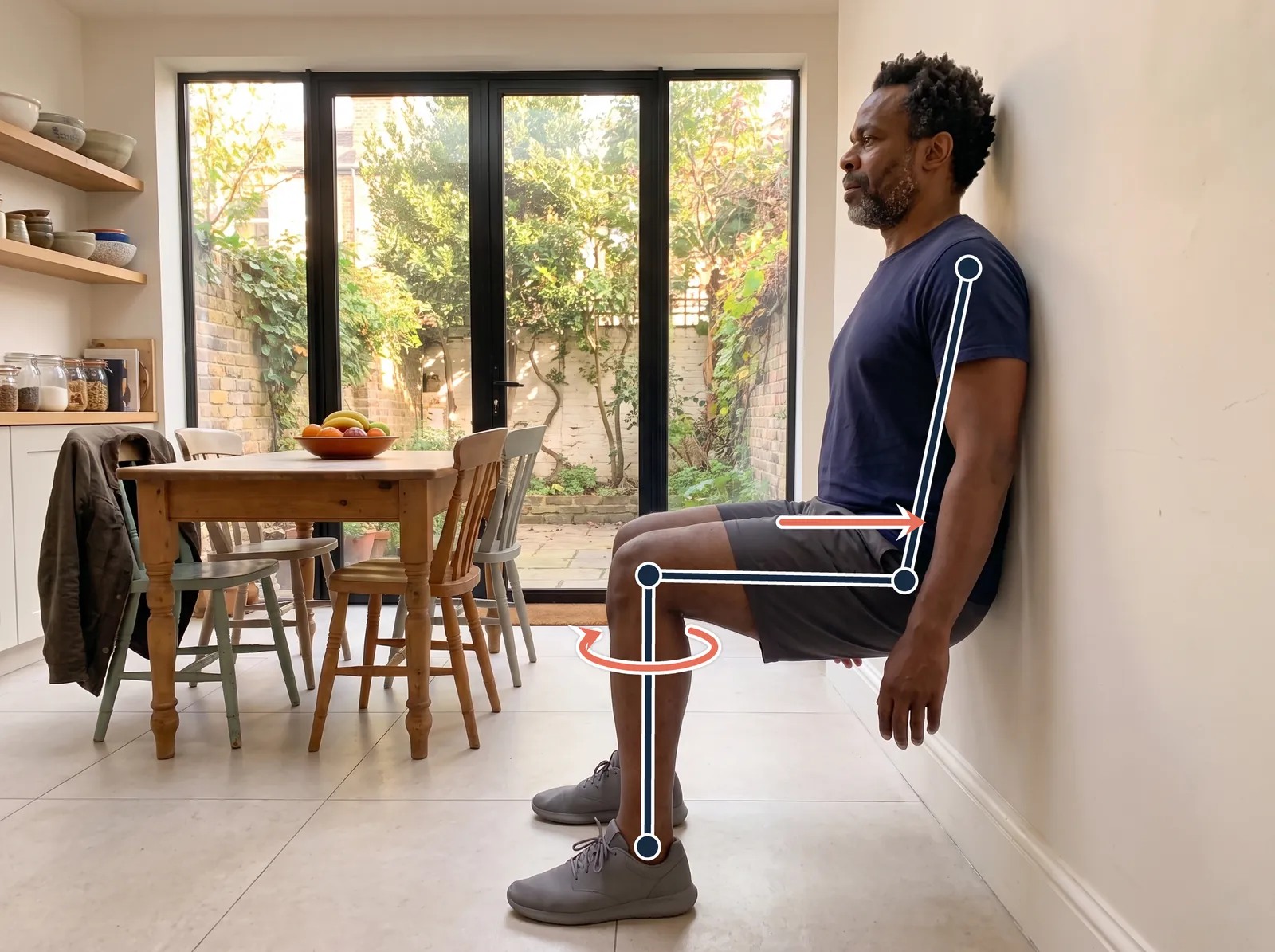
- Press your pelvis back into the wall
- Let your knees turn very slightly outwards
- Knees stay over your ankles, thighs level
Press-ups
As many as you can in one go, body straight, chest to about a fist off the floor.
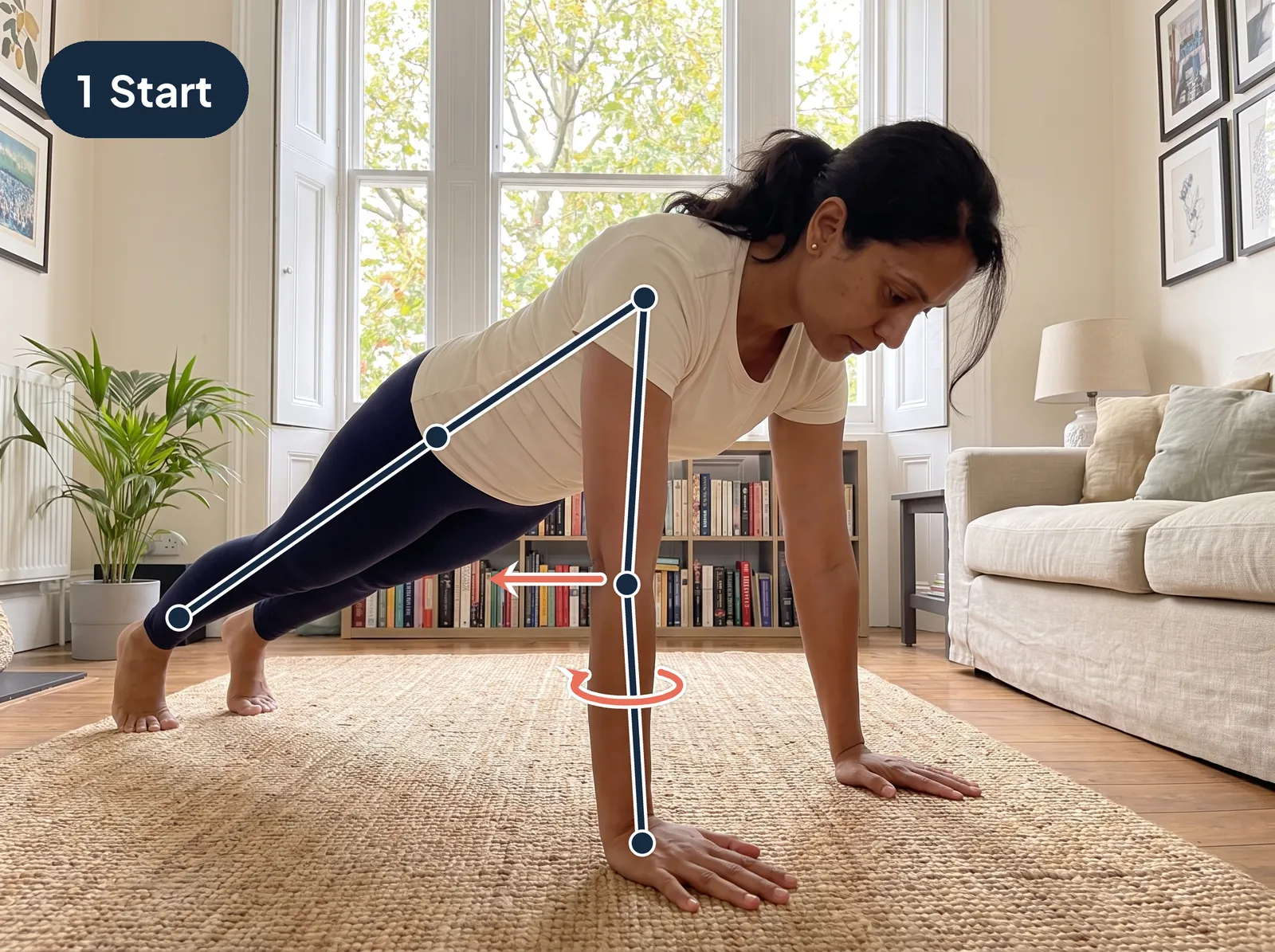
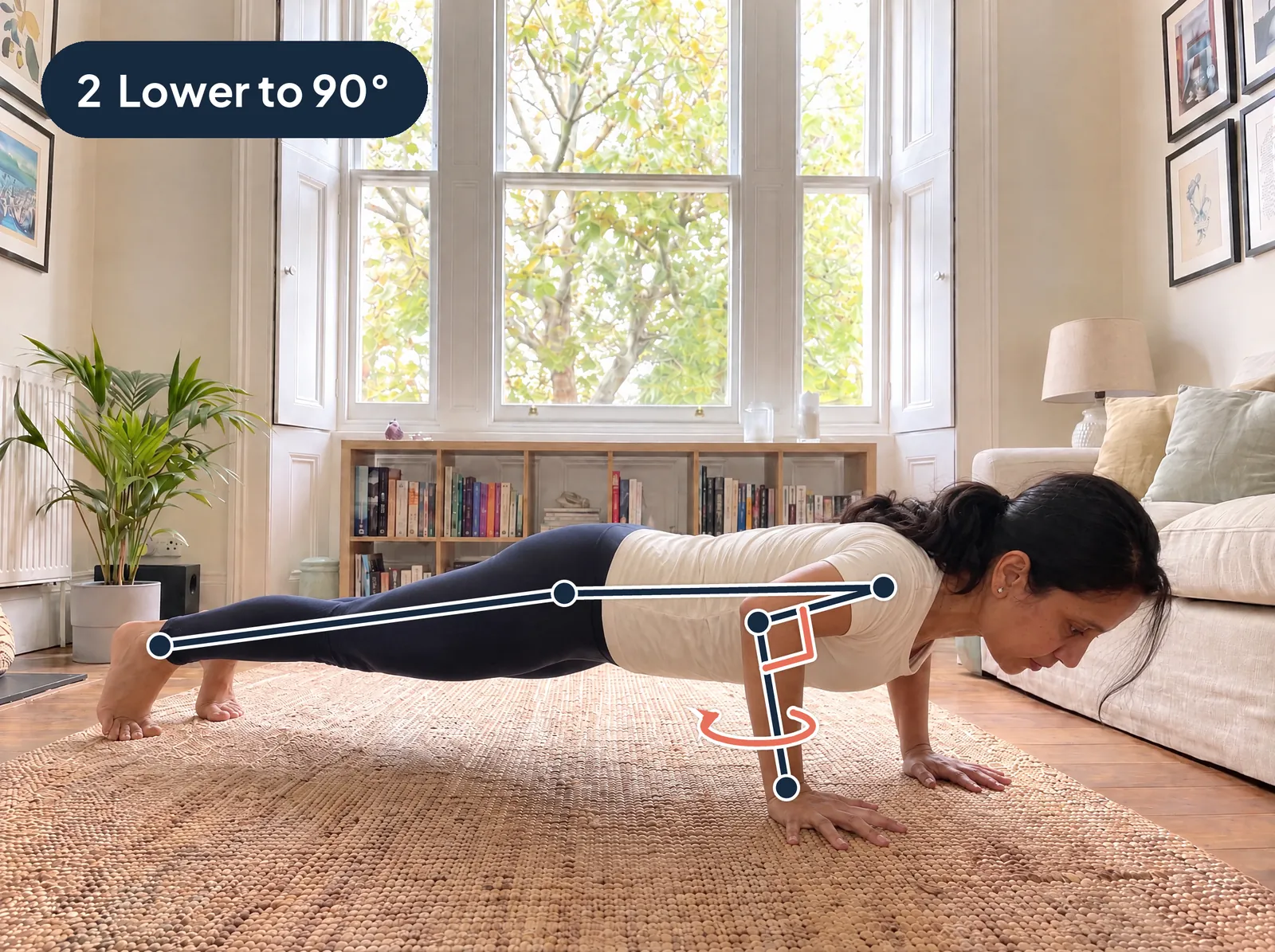
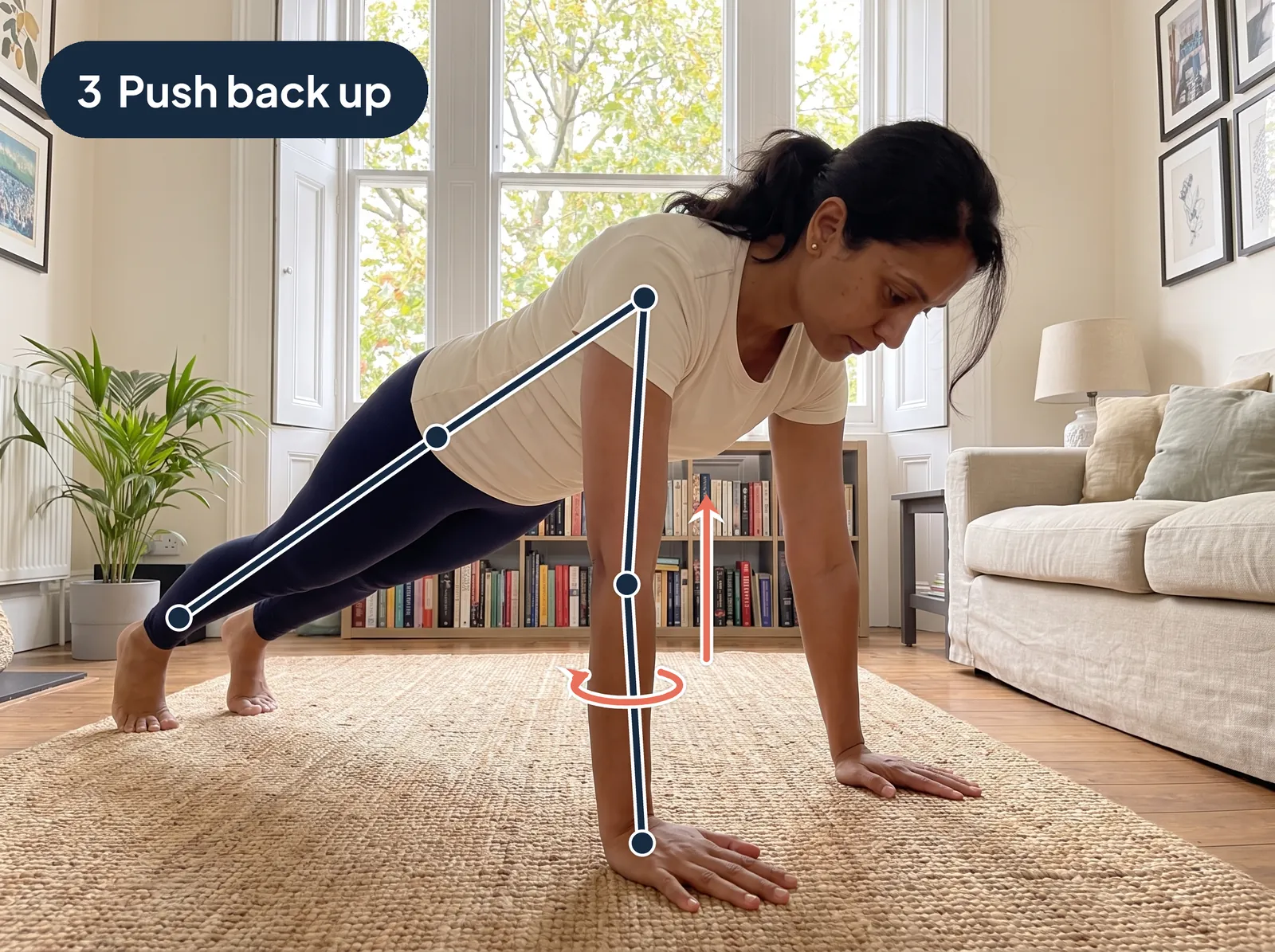
- Elbows travel back as you lower
- Lower until your elbows make a right angle, forearms upright, chest about a fist off the floor
- Screw your hands into the floor, so the insides of your elbows turn to face forward
- Push the floor away to come back up
The plank
Forearms and toes, elbows under your shoulders, body in one line from heel to head. Stop the moment your hips drop or your lower back starts to arch.
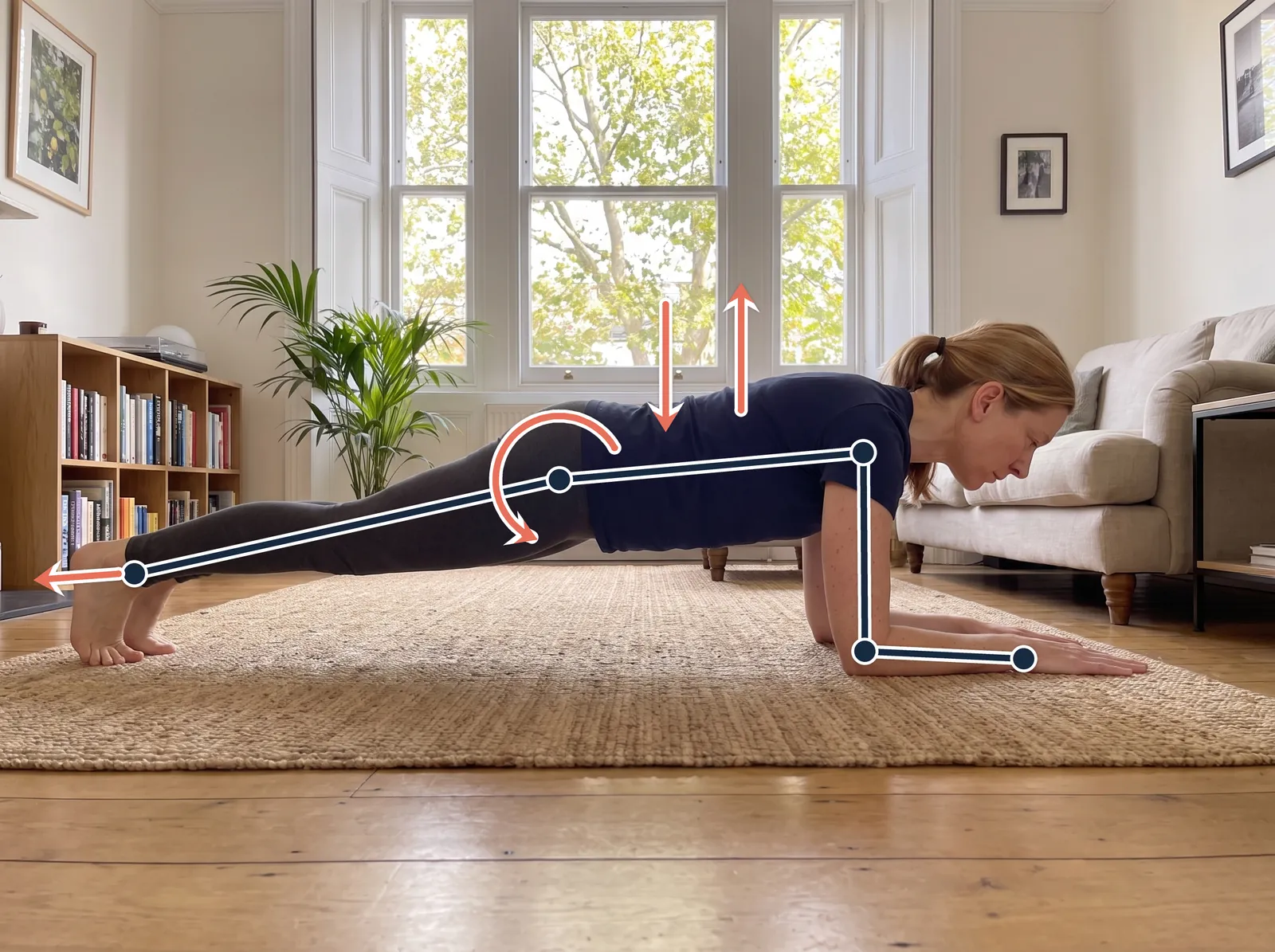
- Reach your heels back
- Tuck your tailbone under
- Keep your hips level with the line
- Push your upper back up, away from the floor
What good looks like
Press-ups are the only one of the three with a published table by age. Here it is for women doing the knees version.
| Age | Average | Good |
|---|---|---|
| 20 to 29 | 17 to 22 | 30 to 35 |
| 30 to 39 | 14 to 21 | 30 to 36 |
| 40 to 49 | 11 to 16 | 24 to 30 |
| 50 to 59 | 10 to 13 | 21 to 24 |
| 60 and over | 5 to 11 | 19 to 22 |
Press-ups are published research. The plank average is a published median. The wall sit is a field standard in common use rather than population data. Only press-ups have an age breakdown, which is why the other two read the same at every age.
Your numbers stay in this browser and are not sent anywhere. Stop if anything hurts, and skip any of the three if you are pregnant, recovering from surgery or managing a knee, back or shoulder problem.
Three numbers tell you where you are today. What to change is the conversation, and that is what the assessment is for.