← Back to journal
MOVE8 min read2026-04-20
Strength training for menopause: what the evidence shows
Falling oestrogen accelerates the loss of muscle and bone through midlife. Progressive strength training is one of the few things proven to protect both, and to ease many of the symptoms that come with the transition.
Strength training is one of the most effective things a woman can do through the menopause transition. As oestrogen falls, the body loses muscle and bone faster, and progressive resistance training is among the few interventions shown to slow that loss, protect bone density, and help with the body-composition changes, the aches and the dips in energy that so often arrive at the same time. It is not a cure-all, but the evidence behind it is strong, and it is rarely complicated.
If you take one thing away: in midlife, lifting is not optional maintenance. It is protective. The British Menopause Society and UK physical activity guidance both point to regular strengthening activity as a core part of staying well through and after the menopause (British Menopause Society, 2022; UK Chief Medical Officers, 2019).
Key takeaways
1. The drop in oestrogen around menopause speeds up the loss of both muscle and bone, raising the risk of osteoporosis and frailty later.
2. Progressive resistance training is one of the few interventions proven to preserve, and in some cases increase, bone mineral density after menopause.
3. Strength work also helps with the muscle loss, joint aches, sleep and mood changes that commonly accompany the transition.
4. You do not need to train to exhaustion. You need to load your body progressively and consistently, with attention to technique.
What menopause does to muscle and bone
Oestrogen does far more than regulate the menstrual cycle. It helps protect bone and supports muscle, so when it declines through perimenopause and after the final period, both are affected.
Bone loss accelerates noticeably in the years around menopause. Women can lose a meaningful proportion of their bone density in the first few years after their final period, which is why osteoporosis affects roughly 1 in 2 women over 50 in the UK, far more than men. Thinner bone fractures more easily, and a hip fracture in later life is a serious event, not a minor one.
Muscle is affected too. The age-related loss of muscle, sarcopenia, runs alongside the hormonal change, and the two compound each other. Less muscle means less strength, a slower metabolism and poorer balance, all of which matter for staying independent and upright in the decades that follow.
Why strength training is the right tool
The useful thing about resistance training is that it acts directly on both problems at once.
For bone, mechanical load is the stimulus that tells the skeleton to maintain and build itself. A 2018 study in the Journal of Bone and Mineral Research found that high-intensity resistance and impact training, performed twice a week, significantly improved bone mineral density at the lumbar spine and femoral neck in postmenopausal women with low bone mass, and did so safely under supervision (Watson et al., 2018). That is a striking result, because most interventions at best slow bone loss; here, supervised loading improved it.
For muscle, progressive resistance training is the most effective way to preserve and rebuild lean mass at any age. A large Cochrane review of resistance training in older adults confirmed clear improvements in strength and the ability to perform everyday activities (Liu and Latham, 2009). Crucially, the body responds to training through and after menopause much as it always has. The hormonal shift changes the urgency, not your capacity to get stronger.
Beyond bone and muscle
Strength training tends to help with the wider experience of menopause, too, though the evidence here varies in strength.
Many women find that resistance work steadies the changes in body composition that come with the transition, because more muscle supports a healthier metabolism. Regular exercise is also consistently linked with better sleep and mood, both of which can take a battering in perimenopause. And building strength around the joints often eases the aches and stiffness that arrive in this period, by giving the body better support and control.
It is worth being honest about the limits. Exercise is not a substitute for medical care, and hormone replacement therapy or other treatments are decisions to make with your GP or a menopause specialist. Strength training sits alongside that, not instead of it.
What this looks like in practice
Effective does not mean punishing. It means loading your major muscle groups against meaningful resistance, two or three times a week, and gradually increasing the challenge over time, the principle of progressive overload.
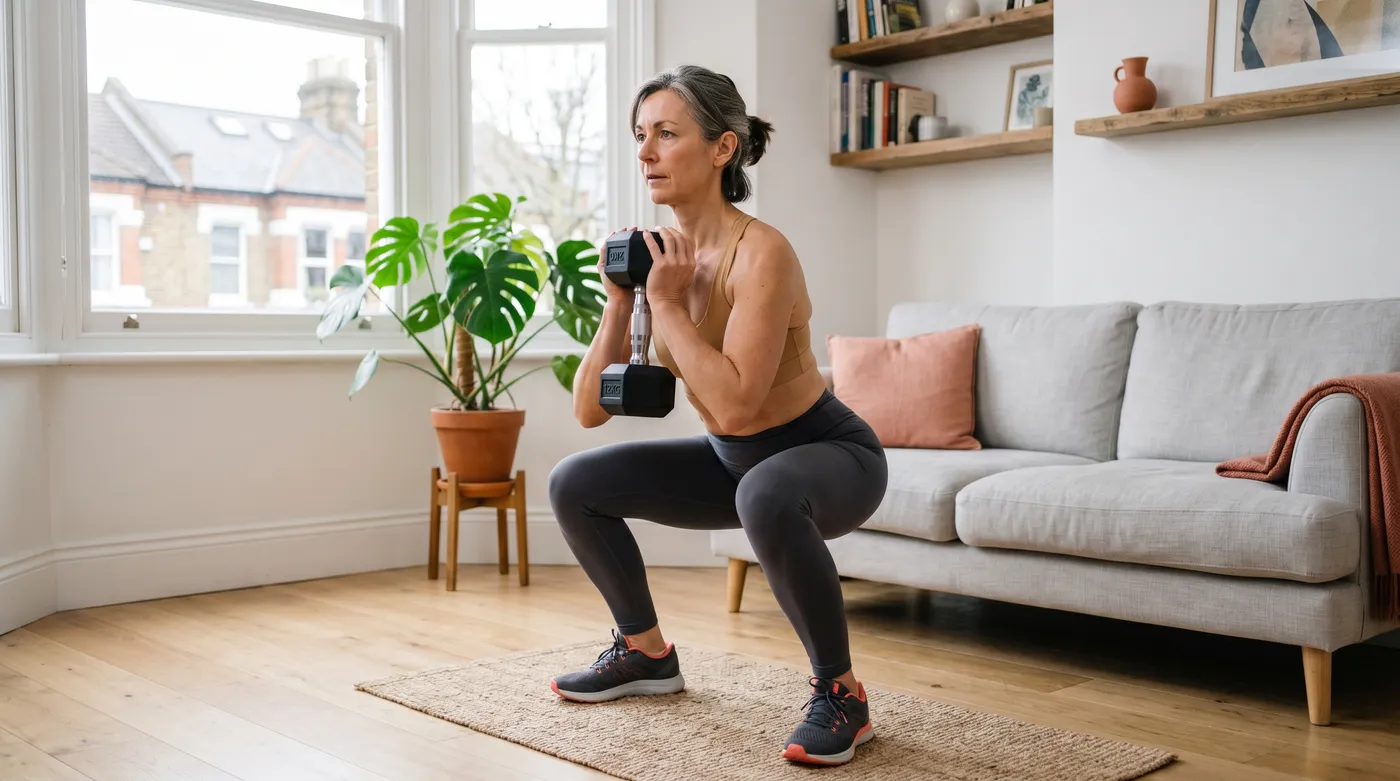
That can be free weights, resistance bands, machines or bodyweight work, depending on where you are starting. Compound movements that work several muscles at once, squats, hinges, pushes and pulls, give the best return. Some weight-bearing impact, where it is safe for you, adds a useful stimulus for bone. Technique matters more here than load, because the point is to train consistently for years, not to chase a heavy number and get hurt.
The most common mistake is training too light, endless reps with weights that never challenge you, which does little for bone or muscle. The second is doing too much too soon and aggravating a joint. Both are avoidable with a sensible plan and someone watching your form.
How Sway approaches this
Sway is in-home and online personal training. You work with one dedicated coach, qualified in both Pilates and Strength and Conditioning, in your home across London or live online wherever you are. For menopause, that combination is genuinely useful: the Pilates side builds the control, mobility and pelvic-floor awareness that make loading safe, and the strength side delivers the bone and muscle stimulus that protects you.
Because the same coach assesses you and then builds and supervises the whole programme, the loading is matched to your body and your stage, rather than dropped on top of restrictions no one checked for. They watch your technique every session, progress the challenge as you get stronger, and adjust around the days when sleep or symptoms have left you depleted. If you already see a GP or menopause specialist, your coach works alongside that rather than ignoring it. And where you need expertise beyond a coach's remit, in nutrition, bone health or wider symptom management, your coach can introduce you to trusted independent specialists from a vetted referral network. They are not Sway staff, and they are suggested only when they would genuinely help.
What you can do today
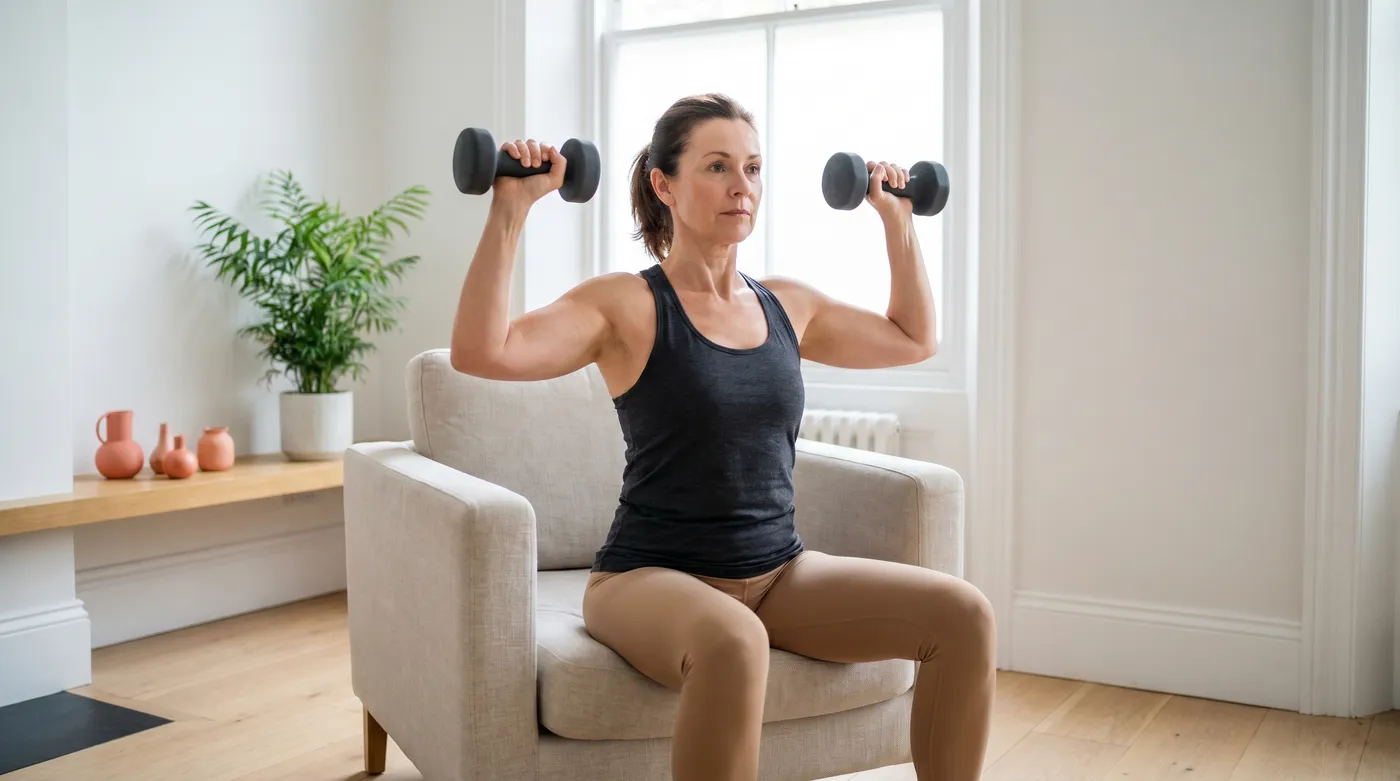
If you do no resistance training at all, start with one movement done well: the sit-to-stand. Stand up from a chair without using your hands, lower yourself slowly, and repeat ten times. Do it daily for a week, then add a weight in each hand. That is progressive overload in miniature, and it is the whole idea.
If you are concerned about your bone health specifically, it is worth asking your GP whether a bone density (DEXA) scan is appropriate for you, particularly if you have risk factors. Knowing your baseline turns a vague worry into something you can act on.
If you would like a programme built around your body and your stage, and supervised properly, Sway offers a free 45-minute assessment, in your home across London or live online.
References
Watson et al. High-intensity resistance and impact training improves bone mineral density in postmenopausal women, 2018
Liu and Latham. Progressive resistance strength training for improving physical function in older adults, Cochrane, 2009
British Menopause Society. Exercise and the menopause guidance, 2022
UK Chief Medical Officers' Physical Activity Guidelines, 2019
Ready to stop guessing?
Book your assessment and meet your coach