← Back to journal
MOVE7 min read2026-04-25
Rebuilding your core and pelvic floor after pregnancy
Postnatal recovery is not about rushing back to your old workouts. It is about rebuilding the core and pelvic floor gradually, in the right order, ideally after a check from a women's-health physio. Here is what the evidence supports.
Rebuilding your core and pelvic floor after pregnancy is best done gradually and in the right order: restore breathing and gentle pelvic-floor and deep-core connection first, then progressively load as your body recovers, ideally after a check from your GP and a women's-health physiotherapist. There is no fixed timeline that suits everyone. Recovery depends on your birth, your healing, and your individual body, not on how quickly someone on social media bounced back.
This is a responsible, unhurried process. Done well, it rebuilds genuine strength that lasts. Rushed, it tends to drive symptoms, leaking, heaviness, a tummy that still domes, that can linger for years.
Key takeaways
1. Get cleared before loading. The standard UK 6 to 8 week postnatal GP check is a starting point, not a green light for everything; a women's-health physiotherapy assessment is the gold standard before returning to impact or heavy lifting (NHS).
2. Pelvic-floor muscle training has strong evidence for preventing and treating postnatal urinary incontinence (Woodley et al., Cochrane, 2020).
3. Rebuild in order: breathing and deep-core connection first, then controlled load, then impact, progressed to how your body responds rather than the calendar.
4. Diastasis recti, separation of the abdominal muscles, is normal in late pregnancy and usually improves with appropriate, gradual core work rather than crunches.
Why the order matters
Pregnancy changes the core profoundly. The abdominal wall stretches, the pelvic floor carries months of increasing load, posture shifts, and after birth the whole system has to relearn how to work together. The pelvic floor and the deep core, the diaphragm, the deep abdominals and the back, function as a connected unit. If you load the outer muscles before the deep system is back online, the load goes somewhere it should not.
This is why jumping straight back to running, heavy lifting or hard abdominal work tends to backfire. The right sequence is to re-establish the connection first. Calm, full breathing that lets the pelvic floor and diaphragm move together. Gentle activation of the deep core. Then, only as that returns, progressively more demanding movement and load.
Pelvic floor: the evidence
Pelvic-floor muscle training is one of the most well-evidenced interventions in women's health. A 2020 Cochrane review found that pelvic-floor muscle training was effective both for preventing and for treating urinary incontinence in the postnatal period, with women who trained significantly less likely to report leaking (Woodley et al., Cochrane Database of Systematic Reviews, 2020).
The practical point: these exercises work, but technique matters. Many women either do not engage the right muscles or never fully release them, both of which blunt the benefit. This is exactly the kind of thing a women's-health physiotherapist can check, and it is worth getting checked rather than guessed.
Diastasis recti and your abdominal wall
A degree of separation of the abdominal muscles, diastasis recti, is normal in late pregnancy; it affects the majority of women by the third trimester. For most, it narrows on its own in the months after birth, and appropriate, gradual core work supports that recovery. Loaded crunches and sit-ups early on are usually unhelpful and can make doming worse.
What helps is connection and control: learning to manage pressure through the abdomen, breathe well, and engage the deep core before adding load. If a significant gap persists, or you notice doming, a heavy or dragging feeling, or leaking, that is a clear signal to be assessed rather than to push on.
Returning to running and lifting
Impact and heavy load are goals, not starting points. UK guidance developed by women's-health physiotherapists suggests most women are not ready to return to running until around 12 weeks postnatal at the earliest, and only once they can manage load and impact without symptoms (Goom et al., 2019). That is a guide, not a promise; some need longer, particularly after a caesarean or a difficult birth.
The marker to watch is not the date on the calendar. It is how your body responds. Progress that brings on leaking, heaviness or pain is progress too soon. Strength built without those symptoms is strength that stays.
How Sway approaches this
Sway is in-home and online personal training in London, built around one dedicated coach who is qualified in both Pilates and Strength and Conditioning. Pilates is particularly well suited to postnatal recovery, because it begins exactly where recovery should: breath, deep-core connection and control, before load. The same coach who rebuilds that foundation is the one who later progresses your strength, so the journey from early recovery to lifting and impact is one coherent plan rather than a series of disconnected handovers.
Sway is clear about its limits here, because this is an area where care matters. Your coach is not a clinician and will not clear you to train. We encourage every postnatal client to have their GP check and, ideally, a women's-health physiotherapy assessment first, and Sway can introduce you to a trusted independent women's-health physiotherapist through its vetted referral network. That physiotherapist is not Sway staff; they are an independent specialist your coach knows, trusts and coordinates with, so your training fits sensibly alongside their guidance. Sessions happen in your own home across London, which for a new parent often means training while the baby naps rather than working around a gym timetable, or live online wherever you are.
What you can do today
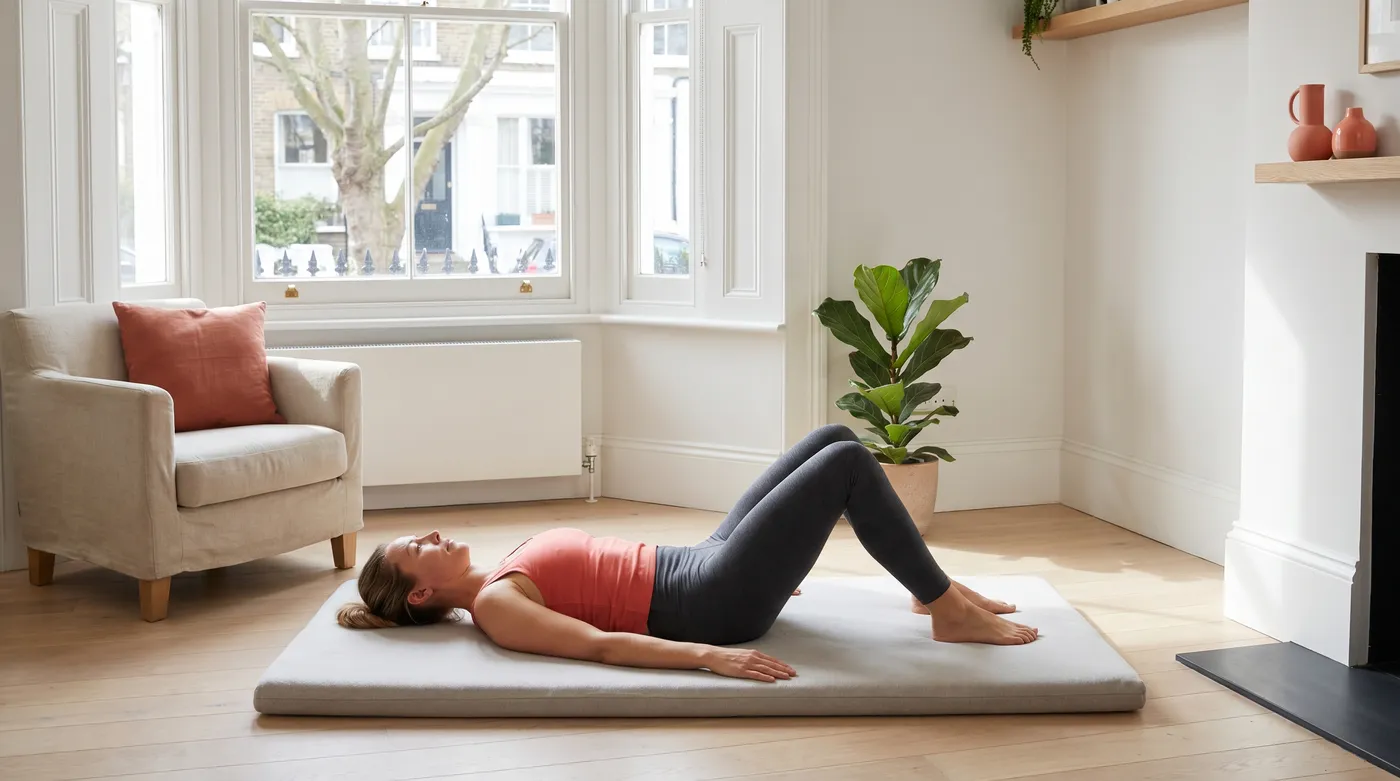
Start gently and start with breath. Lying down, breathe fully into your ribs and let your pelvic floor and abdomen relax on the in-breath, then feel a soft, gentle lift of the pelvic floor on the out-breath. No bracing, no straining. That reconnection is the foundation everything else builds on.
Then get assessed before you load. Book your GP check, and ask about a women's-health physiotherapy assessment, particularly if you have any leaking, heaviness, doming, or pain. These are common and very treatable, and they are not something to train through.
When you are ready to rebuild strength properly, Sway offers a free 45-minute assessment, in your home across London or live online, and will always encourage you to involve the right clinical support first.
References
Woodley SJ, et al. Pelvic floor muscle training for preventing and treating urinary and faecal incontinence in antenatal and postnatal women. Cochrane Database of Systematic Reviews. 2020. Full citation
Goom T, Donnelly G, Brockwell E. Returning to running postnatal: guidelines for medical, health and fitness professionals. 2019. Full citation
NHS. Keeping fit and healthy with a baby; your body after the birth. Full citation
Ready to stop guessing?
Book your assessment and meet your coach