← Back to journal
MOVE7 min read2026-04-19
Reformer vs mat Pilates: which is right for you?
Reformer Pilates uses a spring-loaded machine for adjustable resistance and support; mat Pilates uses your own bodyweight. Neither is better. They train the same principles by different means, and the right choice depends on your body and your goals.
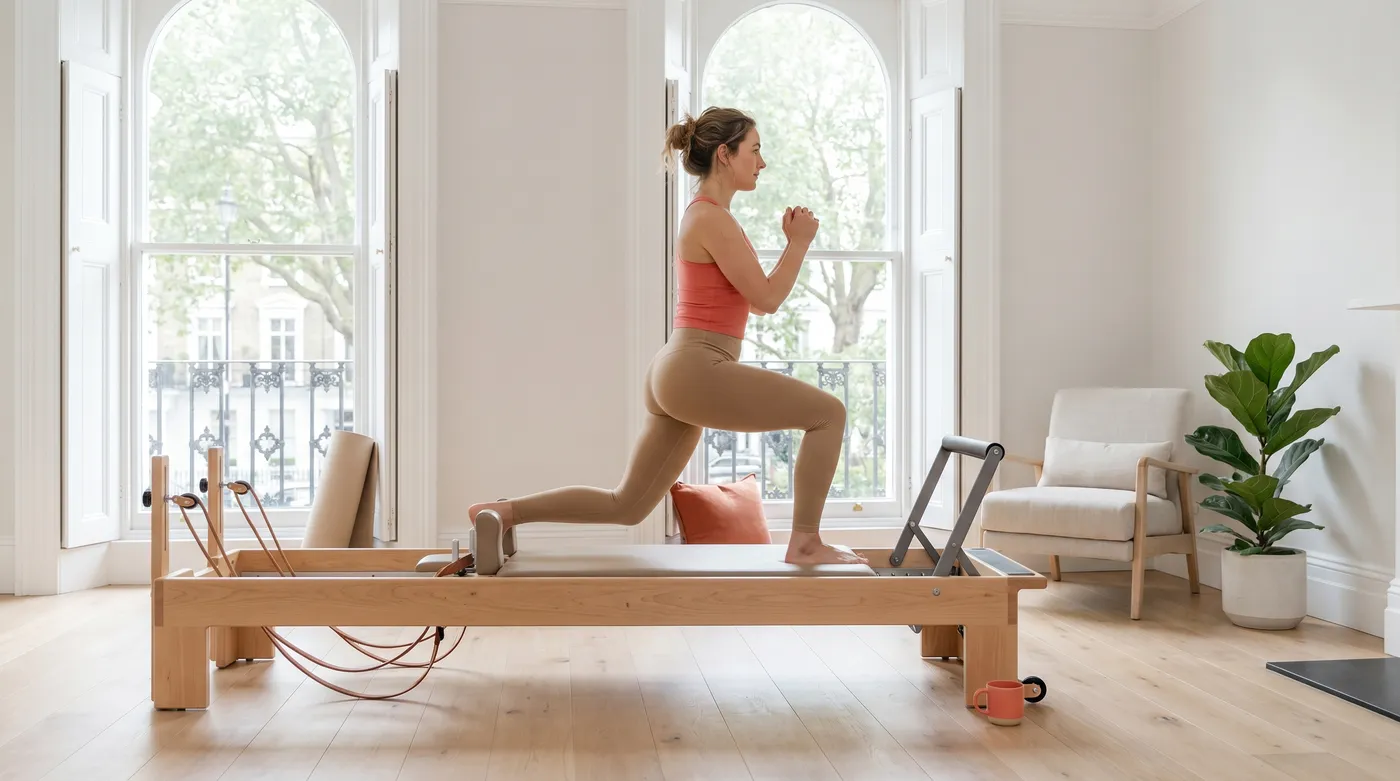
Reformer vs mat Pilates: the honest answer is that neither is better, and most people who stick with Pilates end up doing both. A reformer is a spring-loaded machine that adds adjustable resistance and support; mat Pilates uses your own bodyweight on the floor. They train the same method, the same principles of control, breath and precision, by different means. The right starting point depends on your body, your goals and, frankly, your budget.
If you want the quick version: the reformer is brilliant for guided resistance, support and variety, which makes it especially useful for beginners, for rehabilitation, and for people who want load without strain. Mat Pilates is more demanding of your own stability, costs almost nothing, and you can do it anywhere. Both are real Pilates.
Key takeaways
1. The reformer adds spring resistance and support through a moving carriage; mat Pilates relies on your bodyweight and gravity. Same principles, different tools.
2. The reformer can make exercises both easier (more support) and harder (more resistance), which is why it suits beginners and rehabilitation as well as advanced work.
3. Mat Pilates is more accessible, costs little, and travels anywhere, but it asks more of your own core stability with no machine to guide you.
4. Pilates of either kind improves core strength, balance and movement quality, but on its own it does not provide enough load for meaningful bone density or muscle growth.
What the reformer actually does
The reformer is the piece of equipment most people picture when they think of studio Pilates: a flat carriage that slides along rails, pulled back by a set of springs, with straps, a foot bar and pulleys. You can lie, sit, kneel or stand on it.
The springs are the point. By changing them, your coach can add resistance to make a movement harder, or add support to make it more achievable. That dual nature is the reformer's great strength. A beginner can use the springs as assistance to find a movement they could not yet do unsupported, while a stronger client uses the same machine to load the same movement heavily. The moving carriage also demands constant control, which trains the deep stabilising muscles in a way the floor cannot quite replicate.
This adjustability is why reformer work features so often in rehabilitation. You can load a recovering joint precisely and progress in small, controlled steps, with the machine sharing the load until the body is ready to take more.
What mat Pilates actually does
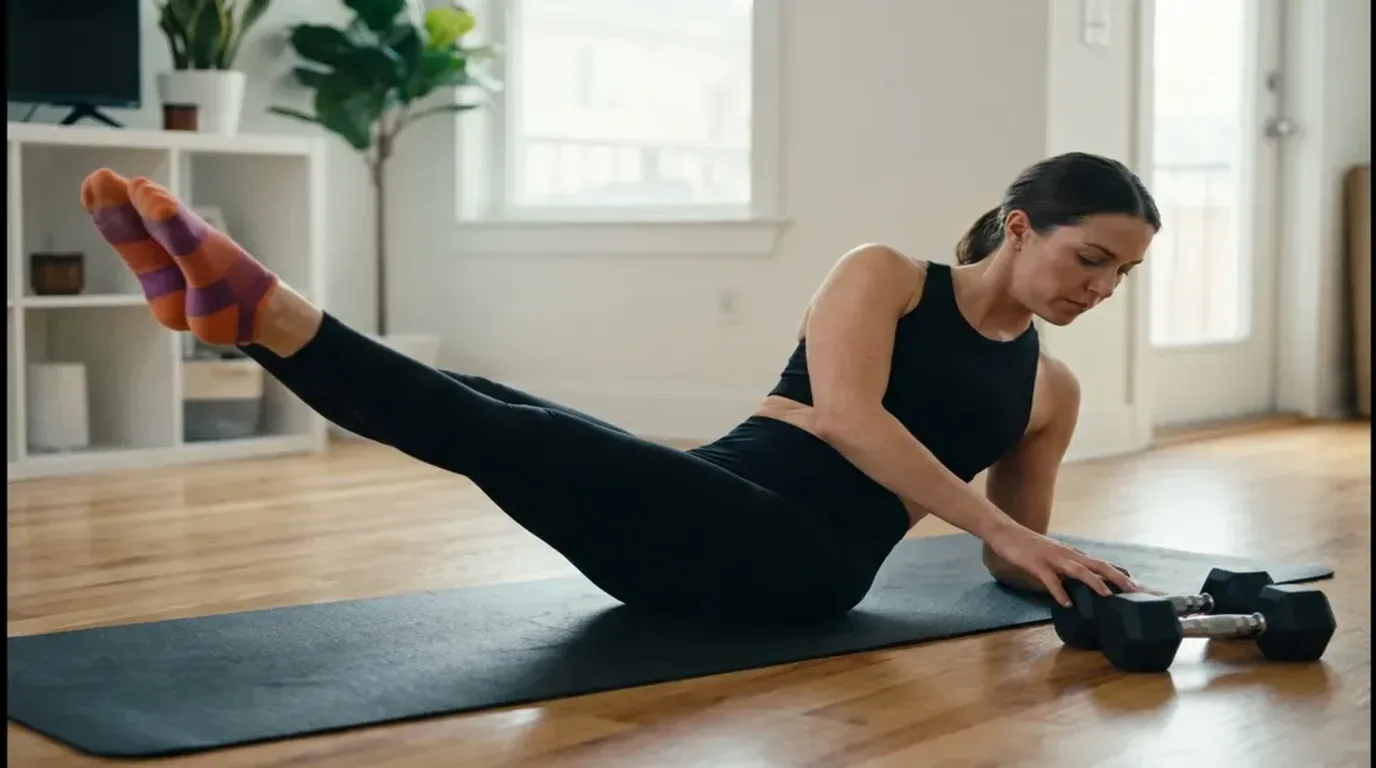
Mat Pilates strips it back to you, the floor and gravity. The exercises are the foundation of the whole method, the work that the reformer repertoire was built around.
Without springs to assist or guide you, your own body has to do all the stabilising. That can make mat work surprisingly demanding. There is nowhere to hide a weak core when nothing is holding the carriage steady for you. Done well, it builds genuine control and body awareness.
Its other virtue is practicality. Pilates at home in London, or anywhere, needs little more than a mat and some floor space, which makes it easy to do consistently. Consistency, not equipment, is what produces results, so the exercise you will actually do regularly is often the one that wins.
Honestly comparing the two
For beginners, the reformer often feels more approachable, because the springs can support you into positions your stability cannot yet hold. Mat work can feel deceptively hard at first, precisely because there is no assistance.
For rehabilitation and managing pain, the reformer's adjustable load is a real advantage. Your coach can dial the resistance to exactly what a recovering body can handle.
For cost and convenience, mat Pilates wins comfortably. Reformers are expensive machines, so reformer sessions cost more, and you generally need access to a studio or a coach who brings the equipment.
For variety, the reformer offers a far larger repertoire of exercises and positions, which keeps things interesting and lets a coach target specific areas more precisely.
None of this makes one the right answer for everyone. It makes the right answer depend on you.
What Pilates does, and does not, do
Whichever you choose, it is worth being clear about what Pilates delivers. A 2019 systematic review found that Pilates significantly improved balance, functional mobility and fall risk in older adults (Bueno de Souza et al., 2019). The evidence for core control, posture and movement quality is solid.
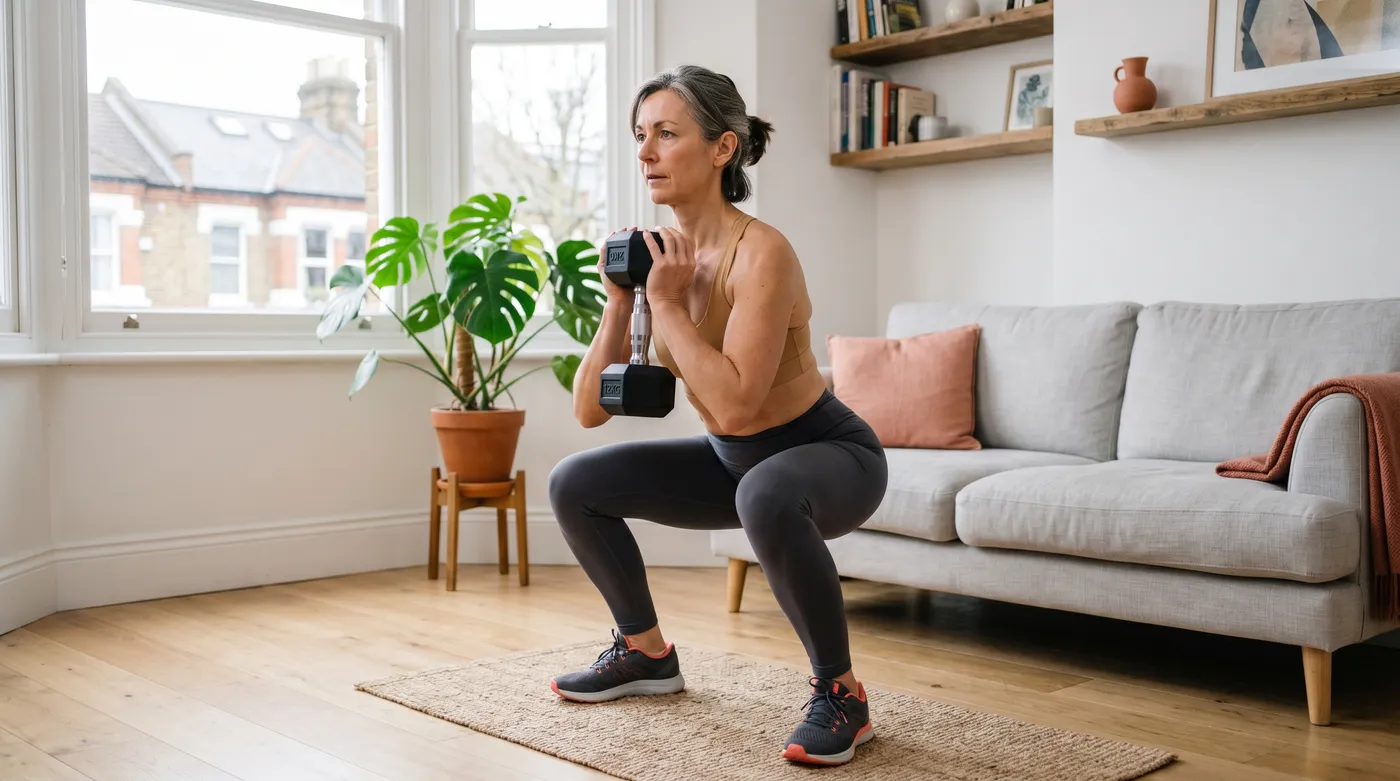
What Pilates does not do, in either form, is provide enough mechanical load to drive meaningful bone density or significant muscle growth. The resistance of a reformer spring is far below the load of a weighted squat or deadlift, and that level of loading is what shifts bone mineral density and lean muscle mass (Watson et al., 2018). For most people who want to stay strong and capable as they age, Pilates is part of the picture, not the whole of it. It teaches you how to move well; strength training teaches your bones and muscles to get tougher.
How Sway approaches this
Sway is in-home and online personal training in London, a team of coaches qualified in both Pilates and Strength, with more than 35,000 sessions delivered since 2018. Your coach is qualified in both Pilates and Strength and Conditioning, which is the relevant point in any reformer-versus-mat conversation.
Because one coach assesses how you move and then builds the whole programme, the question stops being reformer or mat in the abstract. It becomes which tool serves your body this week. Mat work and bodyweight Pilates translate perfectly to in-home and online sessions across London and worldwide, so you can train consistently wherever you are. Where the adjustable resistance of a reformer would genuinely help, your coach factors that in. And because the same person also programmes your Strength work, the Pilates and the loading are sequenced together rather than competing, with mobility and control feeding straight into how you lift.
What you can do today
If you are completely new to Pilates and a little wary, the reformer is often a gentle, well-supported way in. If you want to start tomorrow at no cost, roll out a mat and try a short beginner mat sequence; it will tell you a lot about your own stability.
Either way, do not get too attached to the machine question. The more useful question is whether your Pilates is part of a programme that also builds real strength, and whether someone is watching how you move and adjusting as you go.
If you would like an honest read on which mix suits your body now, Sway offers a free 45-minute assessment, in your home across London or live online.
Ready to stop guessing?
Book your assessment and meet your coach