← Back to journal
LIFE8 min read2026-04-18
How much does a personal trainer cost in London? An honest 2026 guide
Most personal trainers in London charge somewhere between £50 and £150 a session, with in-home and specialist coaching at the higher end. Here is what those numbers actually buy, and how to judge value rather than price.
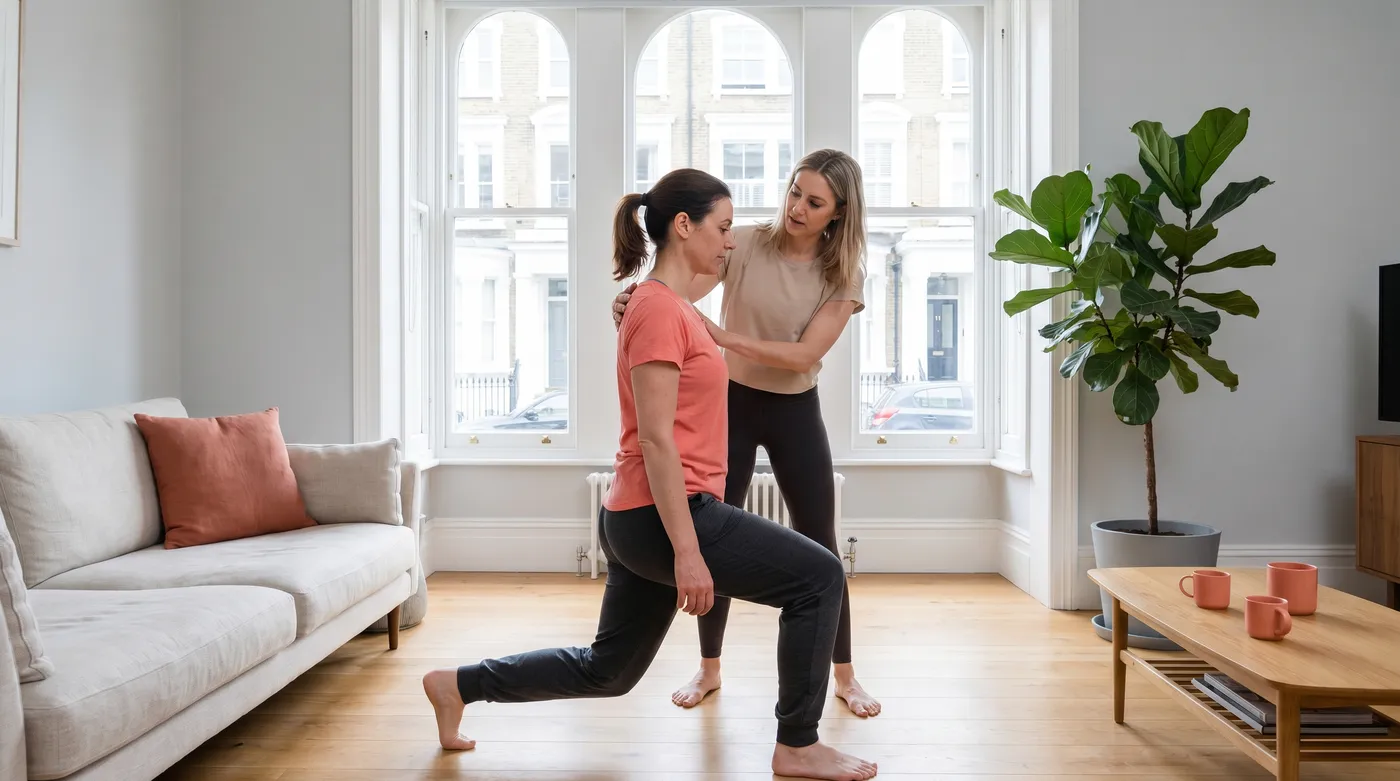
How much does a personal trainer cost in London? In most of the city, a single session runs from around £50 at the lower end to £120 or more for an experienced trainer, with in-home personal training and specialist coaches sitting at the higher end of that range. Online personal training is usually cheaper per session. Prices in central and west London tend to run above the outer boroughs.
That is the short answer. The longer answer matters more, because the headline rate tells you very little about what you actually get, or whether it will work. A £55 session in a busy gym and a £120 session in your living room with a coach who knows your medical history are not the same product at different prices. They are different things.
Key takeaways
1. Personal training in London typically costs £50 to £150 per session. In-home and specialist coaching sit at the upper end; online personal training tends to be lower.
2. The per-session rate is the wrong number to fixate on. What matters is what a session includes, who is delivering it, and whether the programme actually changes your body.
3. Most experienced coaches work in blocks of sessions rather than ad-hoc one-offs, because consistency, not the occasional session, is what produces results.
4. The hidden costs of cheap training, wasted sessions, plateaus and injuries, often make it more expensive than it first appears.
What you are actually paying for
The price of a personal trainer reflects a handful of things, and only some of them are obvious.
The trainer's qualifications and experience. A newly qualified trainer charges less than someone with a decade of work behind them and genuine experience with people like you, whether that is managing osteoarthritis, training through menopause, or rebuilding after surgery. Experience is the part you cannot fake, and it is usually what separates a £55 session from a £120 one.
Where the session happens. A trainer working out of a commercial gym carries lower overheads than one who travels to your home. In-home personal training in London costs more per session because the coach is giving you their travel time and undivided attention, with no one else in the room. You are paying for privacy and convenience as well as the coaching.
What surrounds the session. Two trainers at the same hourly rate can offer wildly different value. One turns up, counts your reps and leaves. The other has assessed how you move, built a programme around it, tracks your progress, adjusts week to week, and is reachable between sessions. The hour looks the same on an invoice. It is not the same.
The London price bands, roughly
These are honest 2026 ranges, not promises, and they vary by area and individual.
Budget and gym-based. Around £40 to £60 a session. Often a trainer early in their career, working in a commercial gym, frequently with several clients on the go. Fine for a fit, healthy person who mainly needs structure and motivation.
Mid-range and experienced. Around £60 to £90 a session. A trainer with several years of experience and a proper specialism. This is where most serious, sustained progress happens for most people.
Premium, specialist and in-home. Around £90 to £150 or more a session. Highly experienced coaches, often working in your home or with a clinical or rehabilitation-informed background, giving you genuinely individual attention. Online personal training with the same calibre of coach usually costs less, because there is no travel and no equipment overhead.
The reason the bands overlap is that experience and specialism move the needle more than location does. A brilliant coach training you online can be better value than a mediocre one in a fancy gym.
Why blocks of sessions, not one-offs
Most experienced coaches sell blocks of sessions rather than single visits, and there is a sound reason that has nothing to do with locking you in.
Results come from consistency over weeks and months, not from the occasional inspired session. The UK Chief Medical Officers' physical activity guidelines recommend strengthening activity on at least two days a week alongside regular aerobic activity, sustained over time, because that is the dose at which the body actually adapts (UK Chief Medical Officers, 2019). A single session here and there does not get you there.
A block also lets a coach plan properly. They can build a programme that progresses, reassess at sensible intervals, and adjust the loading as you get stronger. Ad-hoc one-offs make that impossible; every session starts from scratch.
The real cost of cheap training
The cheapest option is often not the cheapest option.
A session that produces nothing is not good value at any price. If you pay £50 a week for a year and finish no stronger, no more mobile and no less sore than when you started, that is £2,600 spent on very little. Plenty of people have done exactly this, drifting through identical sessions that never progress.
Worse is the session that hurts you. A trainer who loads a body they have not properly assessed can turn a manageable niggle into an injury, and the cost of that, in physiotherapy, lost training and lost time, dwarfs the saving on the session rate. The most expensive training is the kind that sets you back.
Value, then, is not the lowest number on the page. It is the cost per unit of actual progress, and that is a different calculation entirely.
How Sway approaches pricing
Sway is in-home and online personal training. You work with one dedicated coach, qualified in both Pilates and Strength and Conditioning, who trains you in your home across London or live online wherever you are. There is no team to hand you between, and no upselling to a roster of in-house specialists, because there are none. There is one coach who knows your whole picture.
Everything starts with an assessment, because pricing a programme before anyone has seen how you move makes no sense. You can begin with a free 45-minute assessment, in your home across London or live online. From there, Sway works in blocks of sessions rather than scattered one-offs, because that is what produces results, and the block is built around what the assessment actually found. In-home blocks start from a higher rate than online, for the obvious reason that the coach is giving you their travel and undivided attention in your own space.
Rather than quote a single fixed session price, which would be meaningless before anyone understands your goals and your starting point, Sway talks pricing honestly during the assessment, against a clear plan. Where you need expertise beyond a coach's remit, in physiotherapy, nutrition or recovery, your coach can introduce you to trusted independent specialists from a vetted referral network. They are not Sway staff, and they are brought in only when they would genuinely help, so you are not paying for services you do not need.
What you can do today
Before you compare prices, write down what you actually want from training, and be specific. To carry your toddler upstairs without your back complaining. To still be hiking in your seventies. To rebuild after an injury. The goal decides the kind of coach you need, and the kind of coach decides the sensible price.
Then, when you speak to any trainer, ask three questions. Will you assess me properly before we start? Will the programme progress, and how will we know it is working? And what is your experience with people in my situation? The answers tell you far more than the hourly rate.
If you would like an honest read on what you need and what it would cost, Sway offers a free 45-minute assessment, in your home across London or live online. No pressure, no hard sell, just a clear plan and clear pricing.
Ready to stop guessing?
Book your assessment and meet your coach