← Back to journal
LIFE8 min read2026-03-22
When longevity thinking should begin
The decisions you make in midlife shape how you move, think and feel decades later. The research is clear on what matters most, and it is rarely complicated.
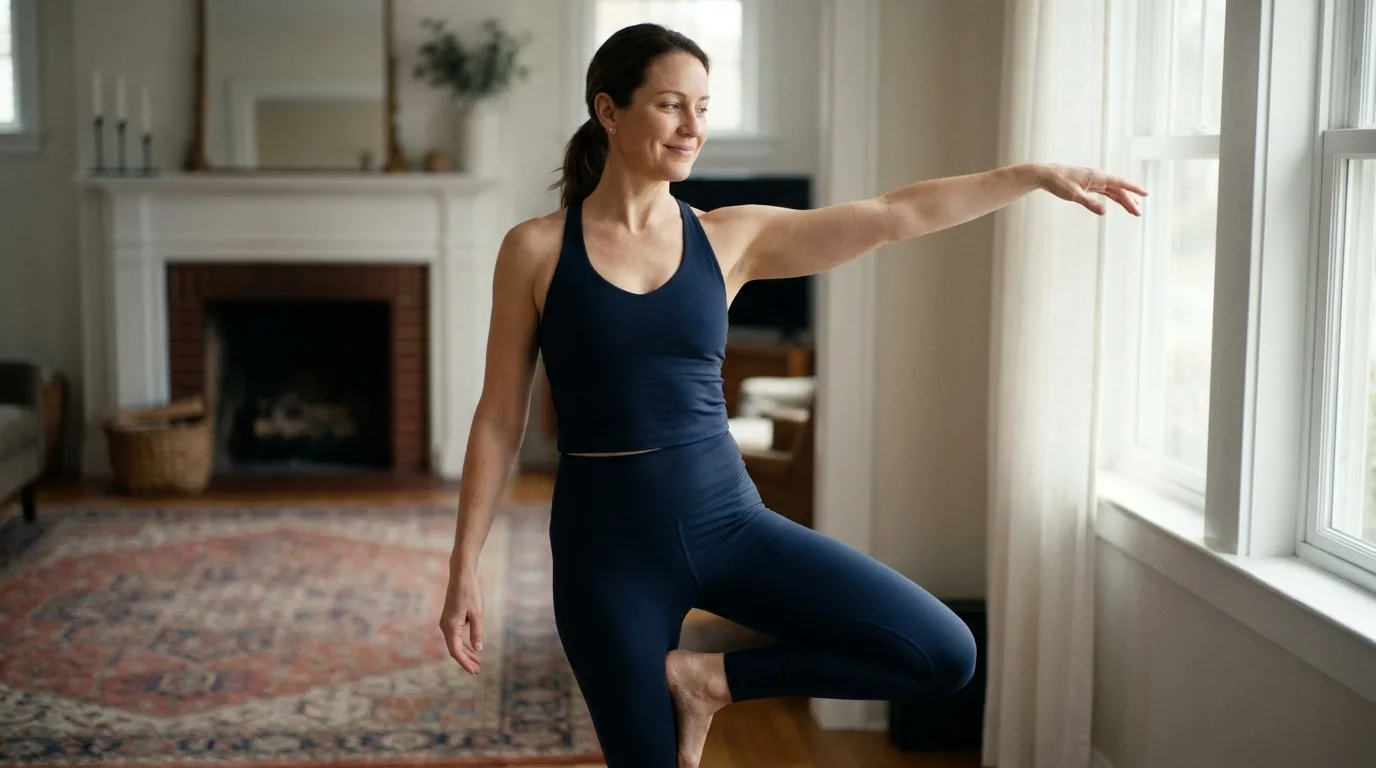
There is a window in midlife that turns out to be the most consequential for long-term health. It is the stretch where your habits do the most to decide how well you will live in your seventies, eighties and beyond.
Most people do not think about longevity until something breaks: a back that goes, a worrying blood test, a fall that should not have happened. By then a decade of easy progress has slipped past. The honest headline is this: the single most useful thing you can do for a long, capable life is keep your heart fit and your muscles loaded, and the best time to start is before you feel you need to.
Key takeaways
1. Cardiorespiratory fitness in midlife is among the strongest predictors of all-cause mortality.
2. Muscle mass declines by roughly 3 to 8% per decade after 30 and faster later on, but resistance training reverses this at any age.
3. Grip strength tracks closely with longevity and takes about 30 seconds to test.
The evidence on midlife fitness
A 2018 study following 122,007 patients at the Cleveland Clinic found that cardiorespiratory fitness was the single strongest predictor of survival. Higher fitness meant lower mortality across every subgroup: younger, older, men, women, healthy, and those with chronic conditions (Mandsager et al., 2018).
The effect was dose-dependent with no point of diminishing returns. The fittest group had 80% lower all-cause mortality than the least fit. The researchers described low fitness as a risk factor comparable to smoking. That is not a reason to panic. It is a reason to keep moving, and to load your body, not just shuffle it.
What happens to muscle over time
From around 30, adults lose roughly 3 to 8% of their muscle mass per decade, a process called sarcopenia that picks up pace later in life. This is not about appearance. Muscle is what lets you rise from a chair, climb stairs, carry shopping and catch yourself when you trip.
A 2017 systematic review in the Journal of Cachexia, Sarcopenia and Muscle found that resistance training was the most effective intervention for slowing and reversing age-related muscle loss, outperforming nutrition supplements alone (Cruz-Jentoft et al., 2017).
People often tell their coach they feel weaker than they did ten years ago and assume that is simply ageing. Usually it is not. It is the result of never asking their muscles to do anything demanding. The encouraging part is how quickly it turns around: within 8 to 12 weeks of sensible loading, most people are measurably stronger.
The grip strength test
Grip strength is one of the most studied predictors of all-cause mortality. A 2015 study published in The Lancet, following 139,691 participants across 17 countries, found that every 5kg drop in grip strength was associated with a 17% increase in cardiovascular mortality and a 16% increase in all-cause mortality (Leong et al., 2015).
You can test grip strength with a hand dynamometer, which most gyms have. It is not a verdict, just a useful baseline you can improve.
Why joined-up support matters for longevity
Longevity is not one discipline. It is strength, mobility, sensible nutrition, catching problems early and protecting sleep, all pulling in the same direction. A restriction caught early saves years of compensating around it. Adequate protein protects the muscle you are working to build. Better sleep removes one of the biggest barriers to recovery.
The trap is letting these run as disconnected errands, where no one sees the whole picture. What helps is continuity: one person who understands how the pieces fit and adjusts the plan as you change.
How Sway approaches this
Sway gives you one dedicated coach, qualified in both Pilates and Strength and Conditioning, who works with you in your home across London or live online worldwide. Because the same coach assesses you, programmes for you and trains you week after week, your longevity plan is coherent rather than a pile of conflicting advice. They build cardiovascular work, progressive strength and balance into one programme that moves with you.
Where you need expertise beyond a coach's remit, in nutrition, recovery or mental wellbeing, Sway can introduce you to trusted independent specialists through a vetted referral network. They are not Sway staff. They are people your coach knows and trusts, brought in only when they would genuinely add something.
What you can do today
Test your grip strength, at the gym or with an inexpensive hand dynamometer.
Then ask yourself a few honest questions. Can you get up from the floor without using your hands? Can you carry two full shopping bags up a flight of stairs without stopping? Can you stand on one leg for 30 seconds with your eyes closed?
These are the functional markers that track quality of life decades from now. If any are difficult, that is not a failure. It is a starting point, and starting points respond well to training.
If you would like a clear baseline and a plan built around it, Sway offers a free initial assessment, online or in your home in London.
References
1. Mandsager K, et al. Association of cardiorespiratory fitness with long-term mortality. JAMA Network Open. 2018.
2. Cruz-Jentoft AJ, et al. Sarcopenia: revised European consensus on definition and diagnosis. Journal of Cachexia, Sarcopenia and Muscle. 2017.
3. Leong DP, et al. Prognostic value of grip strength. The Lancet. 2015.
Ready to stop guessing?
Book your assessment and meet your coach