← Back to journal
MOVE7 min read2026-04-21
Does Pilates help back pain? What the research says
For non-specific low back pain, Pilates can genuinely reduce pain and improve function, on par with other forms of exercise. It is not magic, and it is not for every kind of back pain, but the evidence is reassuringly solid.
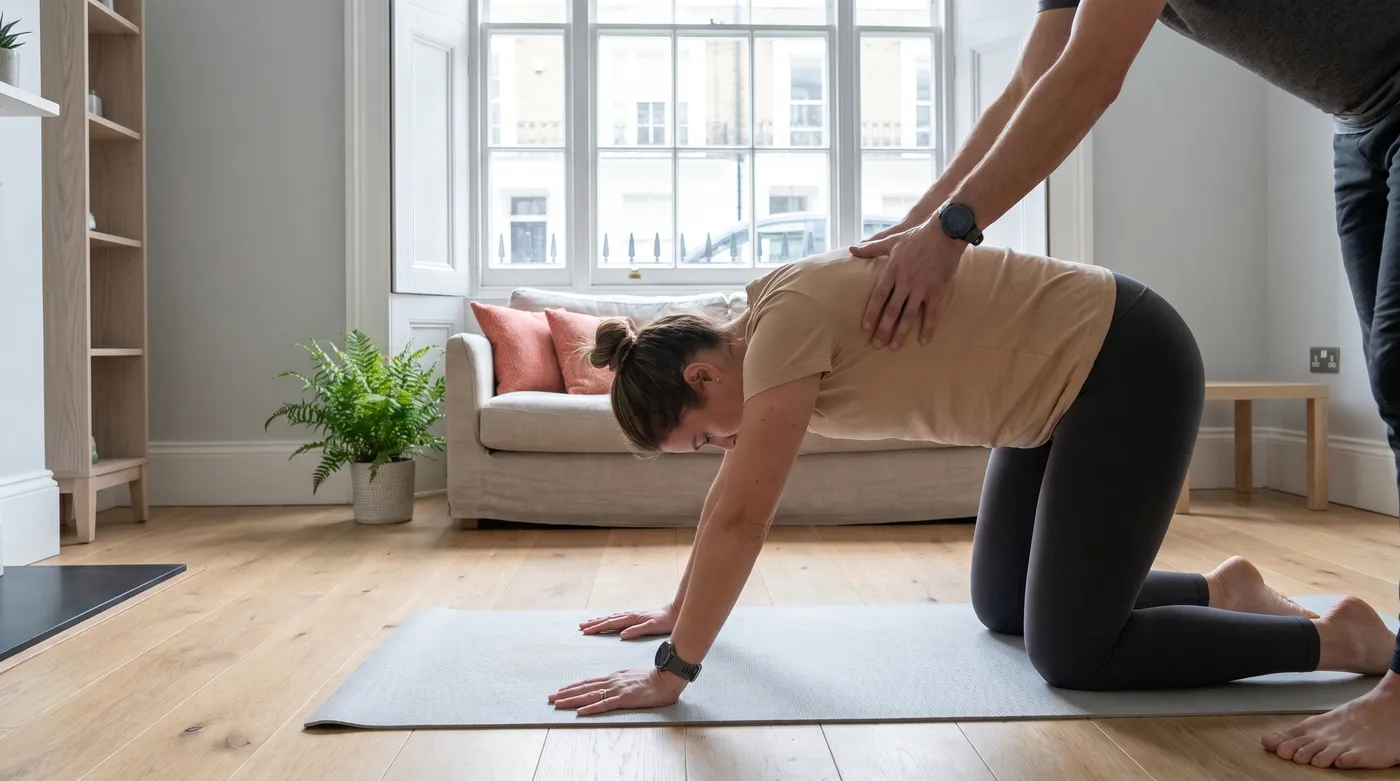
Does Pilates help back pain? For the most common kind, non-specific low back pain, the answer is a qualified yes. Pilates can meaningfully reduce pain and improve day-to-day function, and the research puts it roughly on a par with other well-delivered forms of exercise. It is not a miracle, and it is not the right first step for every back problem, but for the aching, recurring, no-clear-cause back pain that affects so many people, it is a genuinely sensible option.
The important caveat up front: most of the evidence concerns non-specific low back pain, the type with no single identifiable injury or serious underlying cause. If your back pain is severe, came on suddenly, follows a fall, or comes with numbness, weakness or loss of bladder or bowel control, that needs medical assessment first, not a Pilates class.
Key takeaways
1. For non-specific low back pain, Pilates reduces pain and improves function, with effects comparable to other forms of exercise.
2. No single type of exercise is clearly superior for back pain; the best one is generally the one you will do consistently and that is taught well.
3. Pilates helps largely by improving core control, movement confidence and general activity, not by fixing one mythical weak muscle.
4. Certain warning signs mean you should see a clinician before starting any exercise programme.
What the evidence actually shows
Low back pain is one of the most studied conditions in physiotherapy, and Pilates has been examined directly.
A Cochrane review of Pilates for low back pain concluded that it was more effective than minimal intervention for reducing pain and improving function in the short and intermediate term, and that it was about as effective as other forms of exercise (Yamato et al., 2015). The headline from that body of work is consistent and worth holding onto: Pilates helps, and it does not clearly beat other good exercise, nor is it clearly beaten by it.
That fits the wider picture. Major clinical guidance, including from NICE in the UK, recommends keeping active and using exercise as a first-line approach for non-specific low back pain, while advising against prolonged rest (NICE, 2016). The guidance deliberately does not crown one type of exercise as best, because the trials keep showing that what matters most is doing something active, regularly, that suits you.
Why Pilates helps
It is tempting to imagine Pilates works by switching on one deep, neglected muscle. The reality is less mystical and more useful.
Pilates trains controlled, precise movement and the deep muscles that stabilise the spine and pelvis, which often leaves people feeling more in command of their bodies and less braced against movement. It improves general mobility and gets people moving regularly, and regular activity is itself one of the most reliable things for back pain. It also tends to rebuild confidence, and that part matters more than people expect.
A great deal of persistent back pain is bound up with fear of movement. After a painful episode, people start guarding, avoiding bending, lifting and twisting long after the tissue has settled. Fear-avoidance of this kind predicts ongoing disability more strongly than the original problem (Wertli et al., 2014). A well-taught Pilates approach, where you gradually and safely move in the ways you have been avoiding, chips away at that fear. The strength is part of it, but reteaching the body that movement is safe is often the bigger win.
What Pilates will not do
It is worth being clear about the limits, because honesty is more useful than enthusiasm.
Pilates is not a substitute for medical assessment when there are warning signs. Back pain with leg weakness, numbness, pins and needles spreading down a limb, problems controlling your bladder or bowel, unexplained weight loss, or pain after significant trauma all warrant seeing a GP or physiotherapist first. Those features can signal something that needs proper diagnosis.
Nor does Pilates, on its own, build much bone density or significant muscle, because spring or bodyweight resistance sits well below the load that drives those adaptations. For many people with back pain, particularly as they age, the best results come from Pilates for control and confidence combined with progressive strength work for resilience. The two cover different ground.
How Sway approaches this
Sway is in-home and online personal training. You work with one dedicated coach, qualified in both Pilates and Strength and Conditioning, in your home across London or live online wherever you are. For back pain, that combination is the point.
Because the same coach assesses how you move and then builds the whole programme, the Pilates work that restores control and confidence and the strength work that builds resilience sit in one coherent plan, rather than being split between practitioners who never compare notes. Graded exposure, gently reintroducing the movements you have been avoiding, happens in a single thread, supervised by someone who watches you every week and adjusts before a niggle becomes a setback. If you already see a physiotherapist or GP, your coach coordinates with them rather than working blind, so you are not left carrying messages between people. And where your situation needs clinical diagnosis or hands-on treatment beyond a coach's remit, your coach will say so plainly and can introduce you to trusted independent specialists, a physiotherapist or osteopath, from a vetted referral network. They are not Sway staff; your coach simply makes sure the movement work fits sensibly alongside what they advise.
What you can do today
If your back pain is the everyday, no-clear-cause kind and you have no warning signs, the worst thing you can usually do is stop moving. Gentle, regular movement beats rest. A simple start is to spend a few minutes each day moving your spine in directions that feel safe, slow rotations, gentle bends, easy hip movements, breathing throughout, and noticing that movement is tolerable.
Make a quiet note of which movements you have started avoiding out of fear rather than genuine pain. That list is often where the real work lies.
And if any of the warning signs above apply, or the pain is severe or not settling, see a GP or physiotherapist before starting anything. If you would like a calm, careful look at how you move and a plan built around your back, Sway offers a free 45-minute assessment, in your home across London or live online.
Ready to stop guessing?
Book your assessment and meet your coach