← Back to journal
LIFE7 min read2026-04-24
Does online personal training actually work?
Live online personal training works, and the research backs it: remotely supervised exercise produces results comparable to in-person training when the coaching is genuine. Here is what makes the difference between a video call that helps and one that wastes your time.
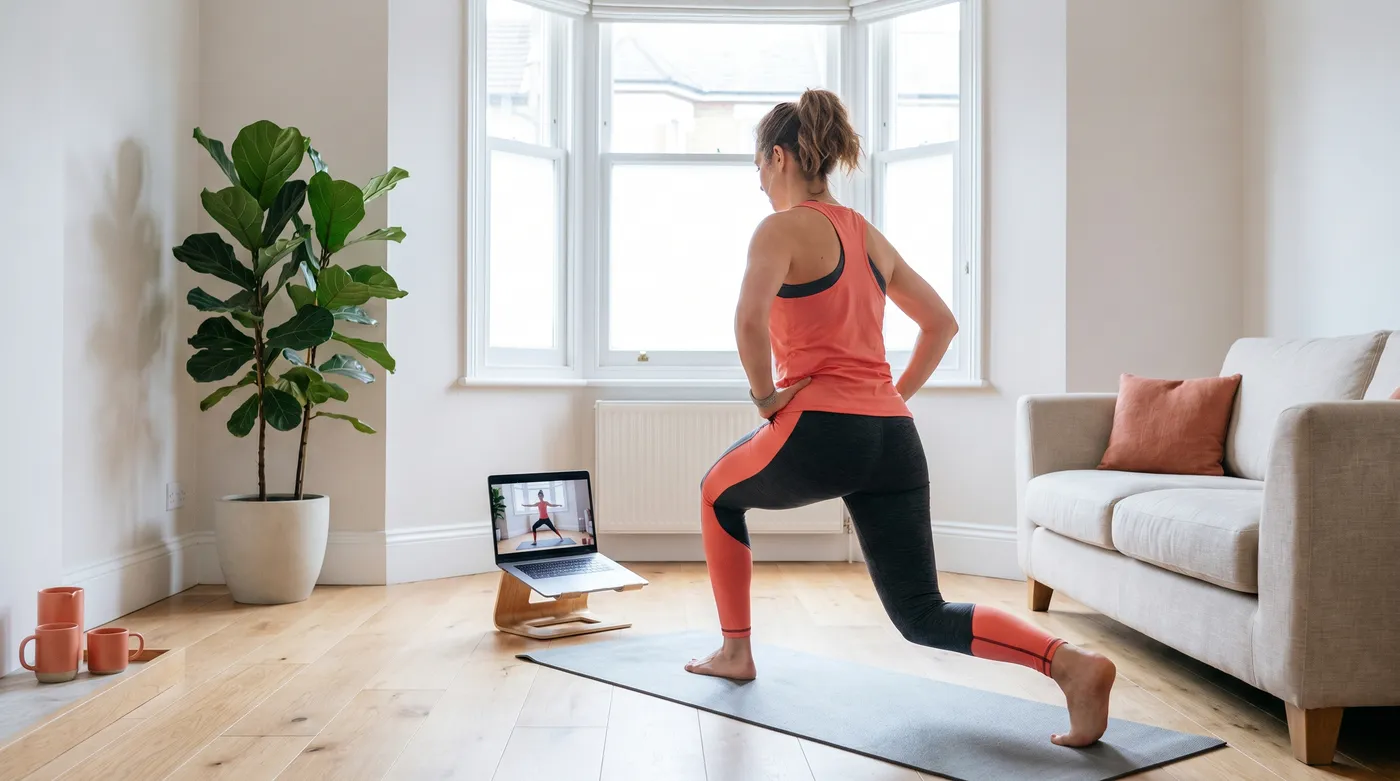
Yes, online personal training works, provided it is genuine live coaching rather than a PDF and a weekly check-in. When a qualified coach watches you move over video in real time, corrects your technique as you go, and progresses your programme week to week, the results are comparable to training in the same room. The research on remotely supervised exercise is consistent on this, and so is the experience of the many people who now train this way.
The thing that determines whether online personal training works is not the screen. It is whether real coaching is happening through it.
Key takeaways
1. Live, supervised online personal training produces outcomes comparable to in-person training for strength, function and adherence (Hong et al., 2017).
2. The screen is not the limitation. The limitation is whether a qualified coach is actually watching and correcting you in real time, or just sending you a plan.
3. Online works especially well for people who travel, live outside major cities, or want a specific coach who is not local to them.
4. There are real limits: a coach cannot put hands on you, and some assessments are better done in person at least once.
What the research says
Telehealth-delivered exercise has been studied for well over a decade, and the picture is encouraging. A 2017 systematic review of remotely delivered exercise interventions found that supervised tele-exercise produced improvements in strength, balance and physical function comparable to face-to-face delivery (Hong et al., Telemedicine and e-Health, 2017).
More recent work during and after the pandemic reinforced it. Reviews of telerehabilitation found that remotely supervised programmes achieved outcomes broadly equivalent to in-person care across a range of musculoskeletal and chronic conditions, with high patient satisfaction and good adherence (Cottrell et al., Clinical Rehabilitation, 2017). The common thread is supervision. Programmes where a clinician or coach actively guided the sessions worked well. Programmes that simply handed people a plan and hoped they followed it did not.
That distinction is the whole game.
Why the screen is not the problem
People assume a coach needs to be in the room to be useful. In practice, a well-placed camera shows a coach almost everything they need: your alignment, your tempo, where you compensate, when your form breaks down under fatigue. A good coach watching a live feed will catch a dropped hip or a rounding spine just as they would standing beside you, and call it out in the moment.
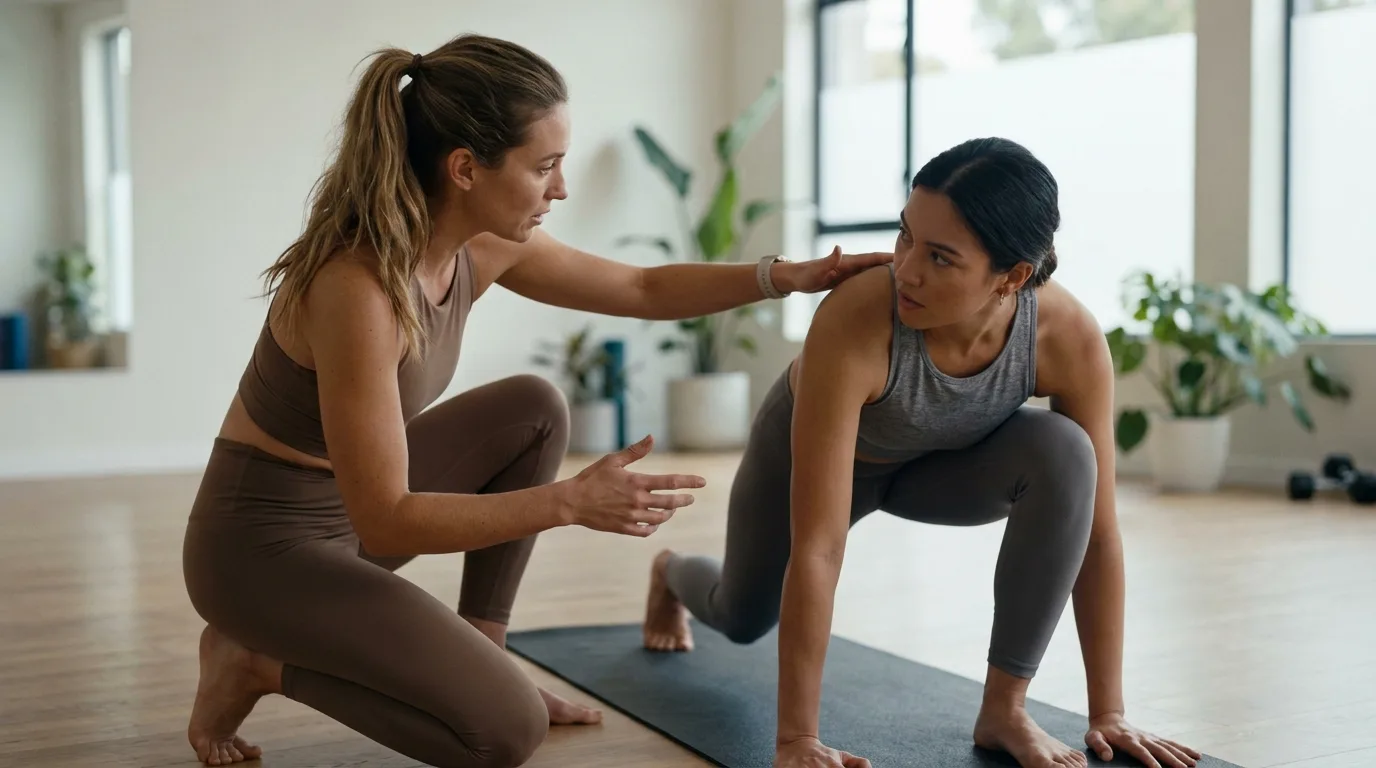
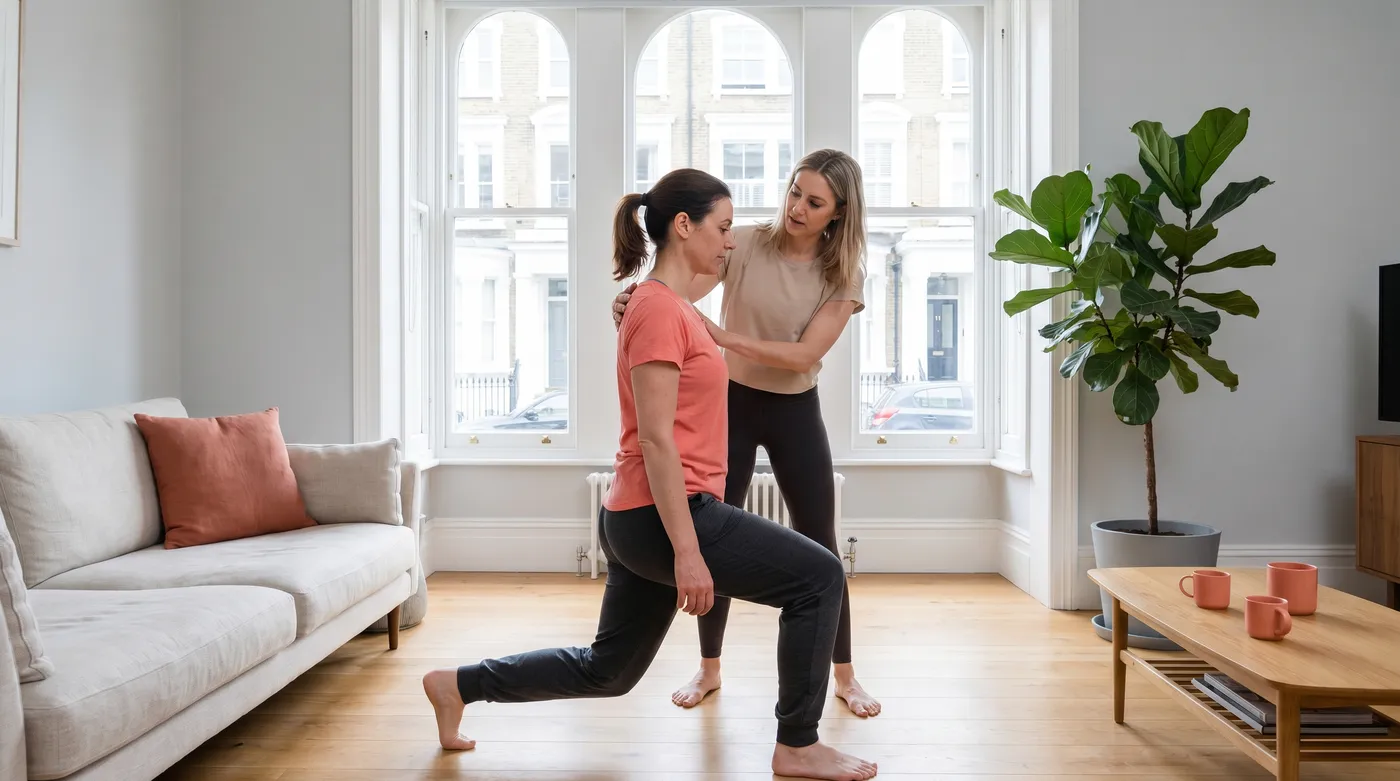
What changes is the cueing. In person a coach might guide you with a light touch. Online they coach with words and demonstration, which, done well, often teaches you to feel and self-correct rather than rely on being adjusted. Many coaches find clients who train online become more independent and aware of their own movement as a result.
Where online genuinely shines
Online personal training removes geography. You can work with a specific coach whose approach suits you even if they are in another city or country. You can keep the same coach when you travel for work, move house, or split your time between two places. There is no commute, which, as the adherence research shows, is one of the biggest reasons people abandon training (Sperandei et al., 2016).
It also suits people who feel self-conscious in gyms, those returning after injury, illness or pregnancy, and anyone whose schedule is too unpredictable for fixed studio times. A session that happens in your kitchen at 7am before work is a session that actually happens.
The honest limits
Online is not identical to in person, and it would be dishonest to pretend otherwise. A coach cannot physically support you through an unfamiliar movement or put hands on a position to adjust it. Your home space and equipment set some boundaries on what you can be programmed to do. And certain assessments, particularly detailed movement screening or anything involving palpation, are simply better done in person at least once.
None of this stops online working. It just means a good coach is honest about when an in-person session, or a referral, would serve you better.
How Sway approaches this
Sway is online and in-home personal training, built around one dedicated coach who is qualified in both Pilates and Strength and Conditioning. Online sessions are live and supervised: your coach is on the call with you, watching every rep, correcting in real time and progressing the programme as you improve. This is coaching, not a video library or a plan emailed once a month.
Sway is in-home and online personal training in London, a team of coaches qualified in both Pilates and Strength, with more than 35,000 sessions delivered since 2018. You can train live online from anywhere in the world, or in your own home if you are in London. Many clients combine the two: an in-person assessment or occasional session, with the bulk of their training online around their week. Where you need expertise beyond coaching, your coach can introduce you to a trusted independent specialist through a vetted referral network; those specialists are not Sway staff, simply people your coach knows, trusts and coordinates with.
What you can do today
If you are wondering whether online personal training will work for you, the test is simple: is the coaching live and supervised, and is it the same coach every time? A plan you follow alone is not personal training. A coach watching you train in real time and adjusting as you go is, whether they are beside you or on a screen.
Sway offers a free 45-minute online assessment so you can see exactly how live online coaching feels before committing to anything. If you are in London and would prefer to start in person, that same free assessment can take place in your home instead.
References
Hong J, et al. Telehealth-delivered exercise interventions: a systematic review. Telemedicine and e-Health. 2017. Full citation
Cottrell MA, et al. Real-time telerehabilitation for the treatment of musculoskeletal conditions is effective and comparable to in-person care: a systematic review. Clinical Rehabilitation. 2017. Full citation
Sperandei S, et al. Adherence to physical activity. Journal of Science and Medicine in Sport. 2016. Full citation
Ready to stop guessing?
Book your assessment and meet your coach