← Back to journal
LIFE7 min read2026-03-30
Why the same workout stops working as you get older
It is not a motivation problem. As you age, the way your body builds muscle, stores fat and recovers genuinely changes - so your training has to change with it.
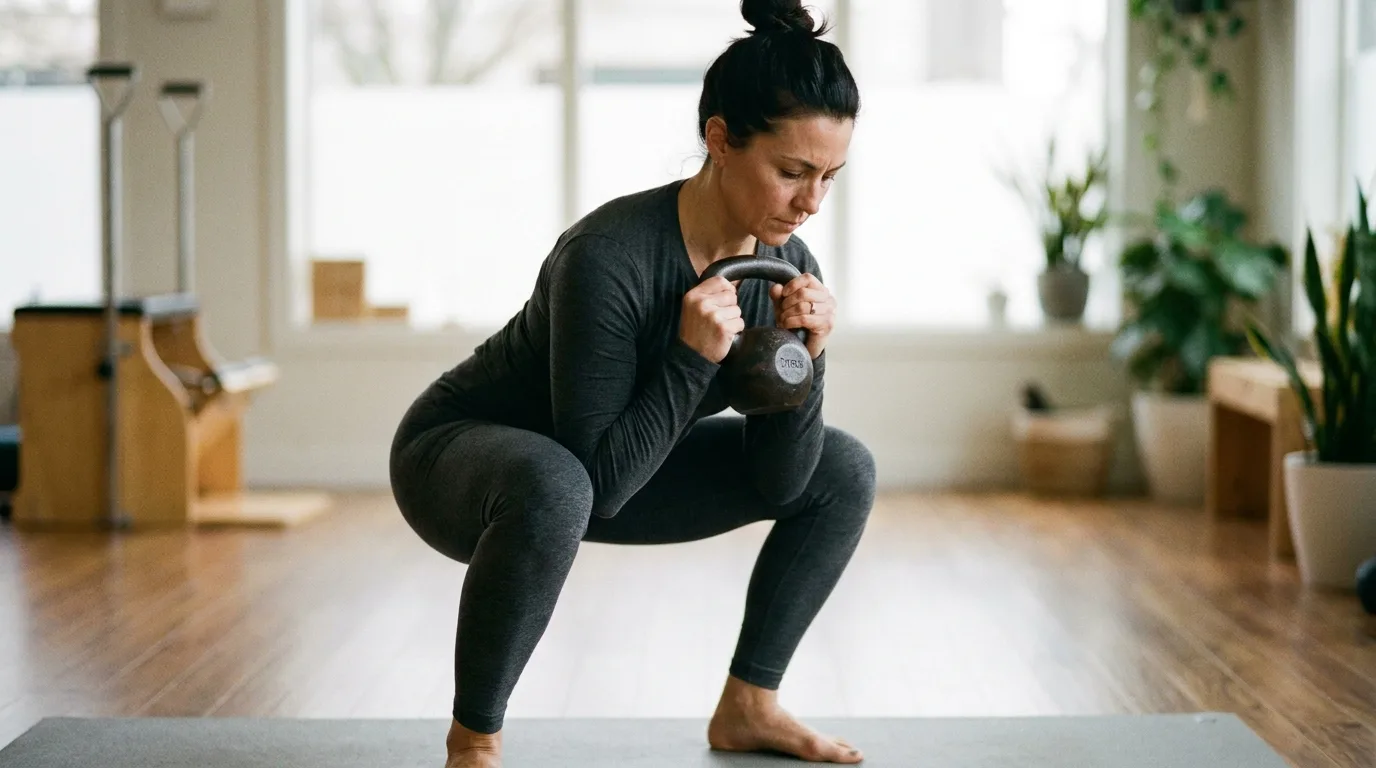
You used to run three times a week and feel great. The same gym routine used to bring results. Now the same effort produces nothing - or worse, it produces niggles and injuries.
If a routine that once worked has quietly stopped working, the usual cause is not willpower. It is physiology. Your body has changed, your programme has not, and the gap between the two is where the frustration lives. The good news is that it is fixable.
Key takeaways
1. From your forties onward, shifts in oestrogen, testosterone and growth hormone change how your body responds to the same exercise. Identical effort produces different results.
2. Recovery takes longer, muscle protein synthesis slows, and fat distribution shifts. These are measurable, hormonal changes - not a failure of discipline.
3. Training your current physiology, rather than the body you remember from a decade ago, makes progress possible again.
What changes with age
Several hormonal shifts that occur between roughly 40 and 60 directly affect how you respond to exercise.
Oestrogen decline. In women, oestrogen falls significantly during perimenopause and menopause. Oestrogen plays a direct role in muscle protein synthesis, bone density and inflammation regulation. A 2015 review in Exercise and Sport Sciences Reviews found that post-menopausal women had a 30% reduction in muscle protein synthesis compared to pre-menopausal women (Hansen and Kjaer, 2015).
Testosterone decline. In men, testosterone decreases by approximately 1% per year after 30. By the mid-fifties, levels are 20-25% lower than at 30. Lower testosterone reduces muscle recovery rates and the capacity for building new tissue.
Growth hormone decline. GH decreases by roughly 14% per decade after 30, which affects tissue repair, body composition and recovery between sessions.
Anabolic resistance. Over time, muscles become less responsive to the same protein intake and training stimulus. You need more protein and a higher-quality training stimulus to achieve the same response (Burd et al., 2012).
The practical effects
You recover more slowly. A session that needed 24 hours of recovery in your thirties may need 48-72 hours later on. Training four hard days a week at the same intensity becomes counterproductive.
You lose muscle faster when you stop moving. A 2013 study found that two weeks of reduced activity in older adults caused muscle loss equivalent to 40 years of normal ageing (Breen et al., 2013). "Use it or lose it" has rarely been more literal.
Fat distribution shifts. Visceral fat around the organs tends to increase even when total weight stays the same. That is a hormonally driven metabolic change, not simply a matter of calories.
Connective tissue changes too. Tendons and ligaments become less elastic, which raises the risk of tendon injury if you skip warm-ups or progress too fast.
What to change
The evidence points to specific, practical adjustments.
Train with meaningful load. A 2018 systematic review found that moderate-to-high load resistance training (60-80% of one-rep max) produced the best outcomes for bone density and lean mass in post-menopausal women. Very light weights and endless reps are not enough on their own (Kemmler et al., 2018).
Build in more recovery. Space harder sessions 48-72 hours apart and use the days between for mobility, Pilates or walking rather than complete inactivity.
Eat more protein. Aim for around 1.2-1.6g per kg of bodyweight daily, spread fairly evenly across three meals, to offset anabolic resistance.
Add balance and mobility work. One or two sessions a week of balance-specific work reduces fall risk and protects the joints you are loading.
Reassess, do not guess. What worked last year may not work this year. Regular reassessment of the programme matters more than grinding harder.
How Sway approaches this
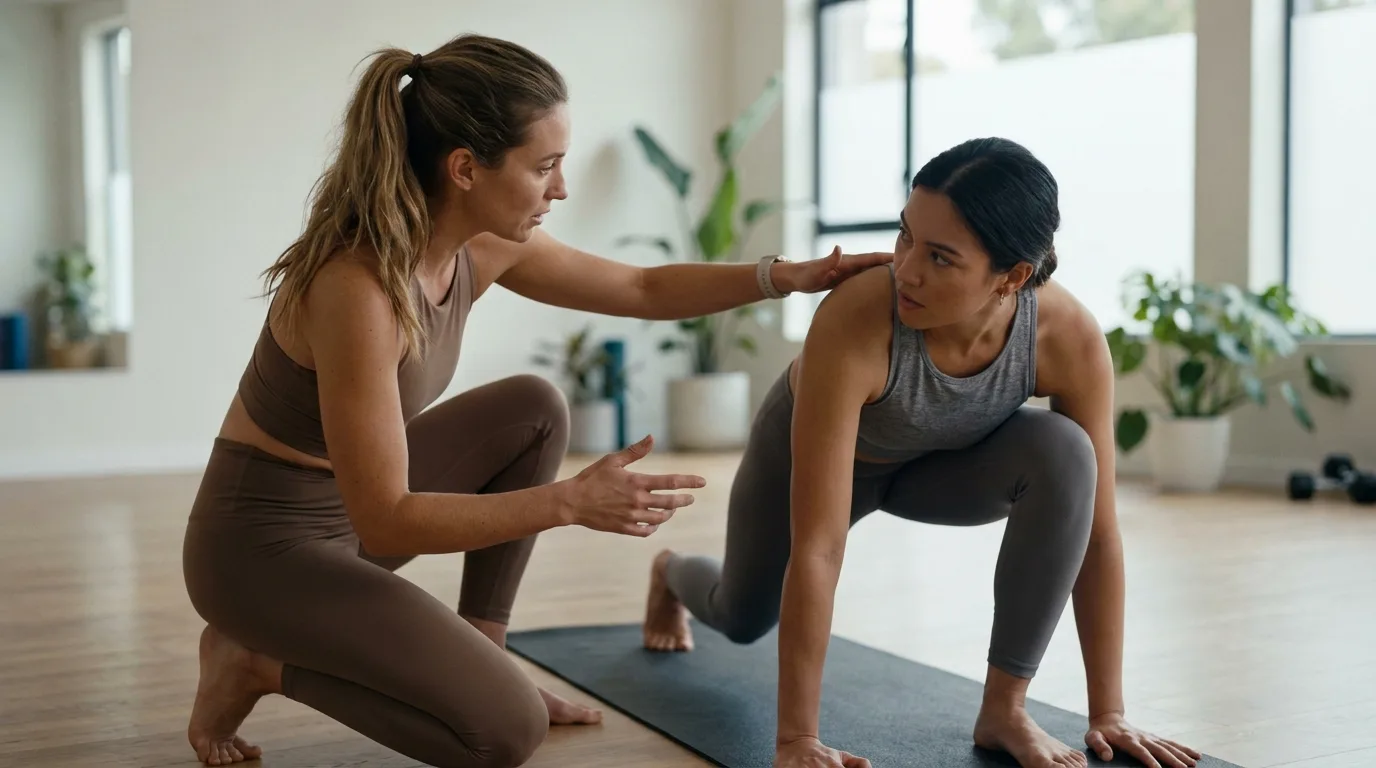
Sway is built around one dedicated coach, qualified in both Pilates and Strength and Conditioning, who works with you in your own home across London or live online wherever you are. There is no revolving cast of practitioners to brief - one person holds the full picture of your body and your goals.
That coach programmes intensity and recovery for the body you have now, adjusts your training as your needs shift through perimenopause or menopause, and keeps the plan progressing rather than going stale. Where recovery, nutrition or stress is holding you back, your coach can introduce you to trusted, independent specialists from a vetted referral network - a physiotherapist, a nutritionist, a therapist - so the right expertise is one warm introduction away rather than something you have to hunt down alone.
As Sway's head coach puts it: many people in midlife are frustrated that the same habits no longer produce the same results. The honest answer is that their physiology has moved on. The work is to train the body in front of you, not the one you remember.
What you can do today
If your current routine has stopped producing results, the instinct is to train harder. Train differently instead.
Start here: write down your current programme and ask when it last changed. If the answer is more than three months ago, your body has likely adapted to it and needs a new stimulus.
If you are not sure what to change, that is exactly what an assessment is for. We are glad to do that with you, in your home in London or online, at no cost - a clear, unhurried look at where your training has stalled and what would move it forward.
References
1. Hansen M, Kjaer M. Influence of sex and estrogen on musculotendinous protein turnover at rest and after exercise. Exercise and Sport Sciences Reviews. 2015.
2. Burd NA, et al. Anabolic resistance of muscle protein synthesis with aging. Exercise and Sport Sciences Reviews. 2012.
3. Breen L, et al. Two weeks of reduced activity decreases leg lean mass and induces anabolic resistance. Journal of Clinical Endocrinology and Metabolism. 2013.
4. Kemmler W, et al. Exercise and fractures in postmenopausal women. Osteoporosis International. 2018.
Ready to stop guessing?
Book your assessment and meet your coach