← Back to journal
MOVE7 min read2026-04-06
What exercises should you avoid as you get older?
The question is rarely which exercises to avoid. It is which exercises are right for your body right now. Fear of movement does more harm than almost any exercise.
It is one of the most searched fitness questions there is. Lists of exercises to avoid as you age sit at the top of the results and get shared endlessly.
But the question itself is the problem. It assumes certain movements become inherently dangerous past a particular birthday. The evidence does not support that. Very few exercises are off-limits for anyone; most simply need to be matched to the body in front of them.
Key takeaways
1. Almost no exercise is universally dangerous as you get older. Most just need modifying to suit your individual body.
2. Avoiding exercise out of fear does more harm than almost any movement performed with good form and sensible progression.
3. The useful question is not what should I avoid? It is what does my body need, and how should I build up to it?
The fear problem
Fear of exercise is one of the biggest barriers to staying active later in life. Articles listing dangerous exercises feed that fear and quietly give people permission to do nothing.
A 2014 study in the European Journal of Pain found that fear-avoidance beliefs were a stronger predictor of chronic disability than the severity of the original injury (Wertli et al., 2014). Put plainly: avoiding movement because you are afraid of pain causes more lasting harm than the movements themselves.
Sway's coaches see this regularly. When someone says they stopped squatting, stopped lifting, stopped reaching overhead because they read it was dangerous, the fear has usually done far more damage than any of those exercises ever would have.
Exercises that often get flagged, and why a blanket ban is wrong
Behind-the-neck lat pulldowns. Flagged for shoulder strain. Reality: with healthy shoulders and full range of motion, this is fine. With a rotator cuff issue, you adjust the grip width or switch to front pulldowns. The exercise is not the problem; the absence of assessment is.
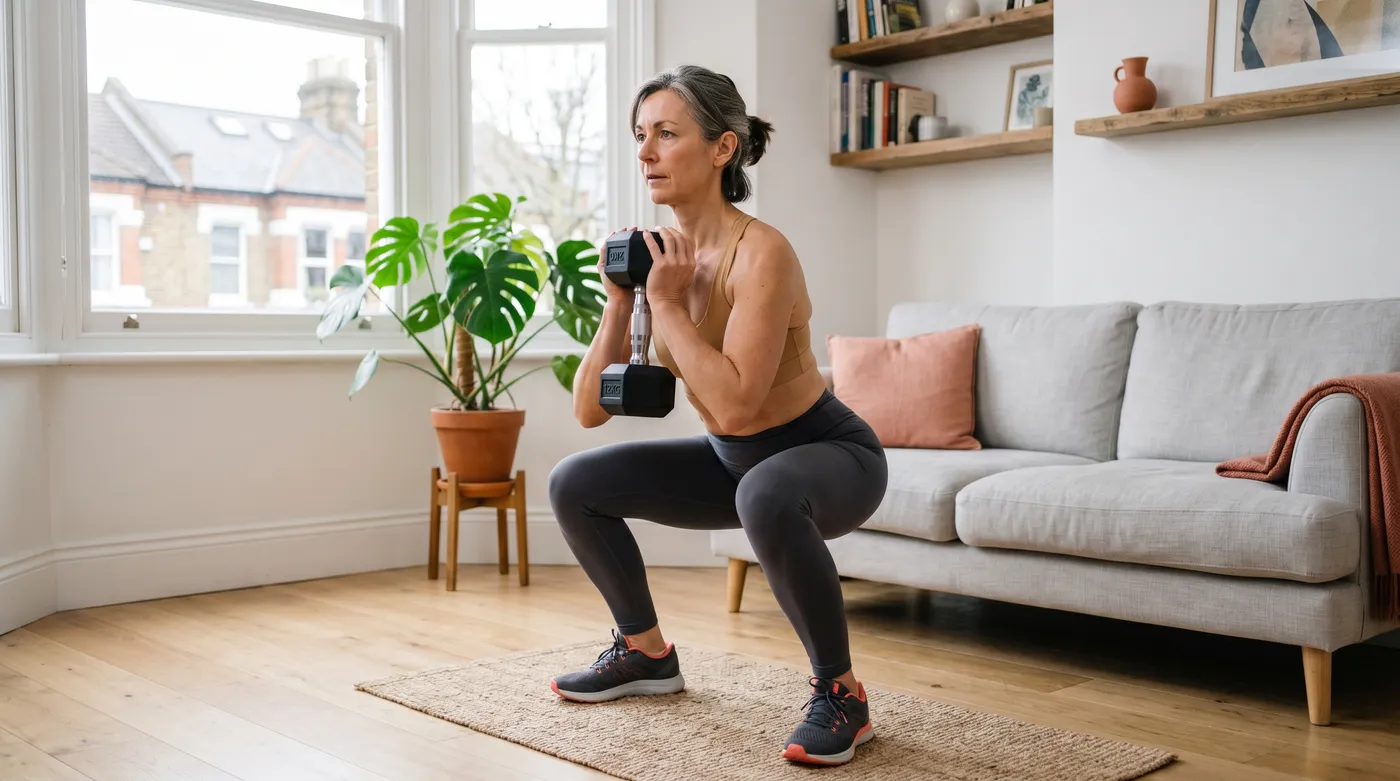
Deep squats. Flagged for knee pressure. Reality: a 2013 systematic review in Sports Medicine found that deep squats do not increase knee injury risk in healthy people. Where a knee condition exists, depth can be limited without throwing out the movement (Hartmann et al., 2013).
Deadlifts. Flagged for back injury. Reality: lifting something off the floor is one of the most useful things you do all day. A 2015 study found that deadlift training reduced pain in patients with mechanical low back pain (Berglund et al., 2015). The variables that matter are form and gradual loading.
Jumping and plyometrics. Flagged for joint impact. Reality: for people at risk of low bone density, controlled impact is specifically recommended by the Royal Osteoporosis Society, because impact loading stimulates bone growth. The intensity has to be appropriate, but the activity itself should not be written off.
What actually matters
The evidence points to three things that matter far more than which specific exercises you choose.
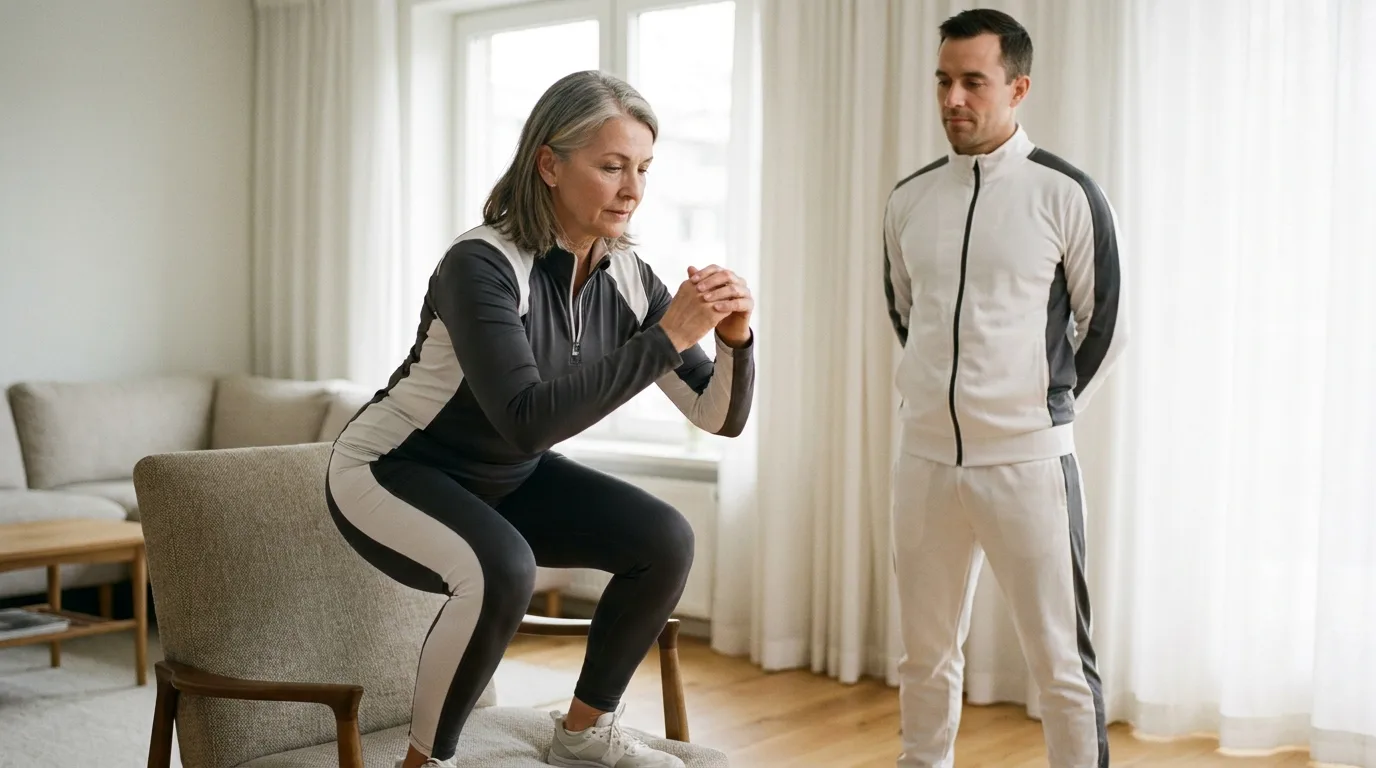
Assessment first. Before any programme, someone qualified should watch how you move. Where are your restrictions? Where is there pain? What is your training history? Without that, any programme is guesswork.
Progressive overload. Start where your body can cope. Build gradually over weeks and months. The biggest injury risk is rarely a particular exercise; it is doing too much, too soon.
Qualified supervision. A coach who understands how to programme for your body and your history makes a real difference. A 2017 study in the British Journal of Sports Medicine found that supervised exercise produced significantly better outcomes and lower injury rates than unsupervised exercise in older adults (Lacroix et al., 2017).
How Sway approaches this
At Sway, nothing goes into your programme without an assessment first.
Sway is in-home and online personal training in London, a team of coaches qualified in both Pilates and Strength, with more than 35,000 sessions delivered since 2018. Your coach is qualified in both Pilates and Strength and Conditioning, so the same person who assesses how you move is the one who decides what to load and when to progress it. If your right shoulder has limited external rotation, your coach will not pile on overhead pressing on that side; they will programme a modified variation and work on restoring the range, then add the full movement back once it returns.
If an assessment suggests something clinical, a diagnosis or hands-on treatment that sits outside a coach's remit, your coach can introduce you to a trusted independent physiotherapist or clinician from a vetted referral network, and make sure your training fits sensibly alongside their advice. Sessions happen in your home across London or live online.
What you can do today
Stop searching for exercises to avoid. Ask a better question: what does my body need right now?
If no one qualified has watched you move in the last year, that is the gap to close. A single unhurried assessment can tell you what your body is capable of and where the real weaknesses are, and that is worth far more than any list of movements to fear. You can book a free one with Sway, online or in your home in London.
References
1. Wertli MM, et al. The role of fear-avoidance beliefs in patients with low back pain. European Journal of Pain. 2014.
2. Hartmann H, et al. Analysis of the load on the knee joint and vertebral column with changes in squatting depth. Sports Medicine. 2013.
3. Berglund L, et al. Which patients with low back pain benefit from deadlift training? Journal of Strength and Conditioning Research. 2015.
4. Lacroix A, et al. Effects of supervised vs unsupervised training programs on balance and muscle strength in older adults. BJSM. 2017.
Ready to stop guessing?
Book your assessment and meet your coach