← Back to journal
MOVE8 min read2026-04-10
Strength training as you get older: what the research actually says
You do not need lighter weights and endless reps. You need progressive resistance. The evidence on this is clear and consistent, whatever your age.
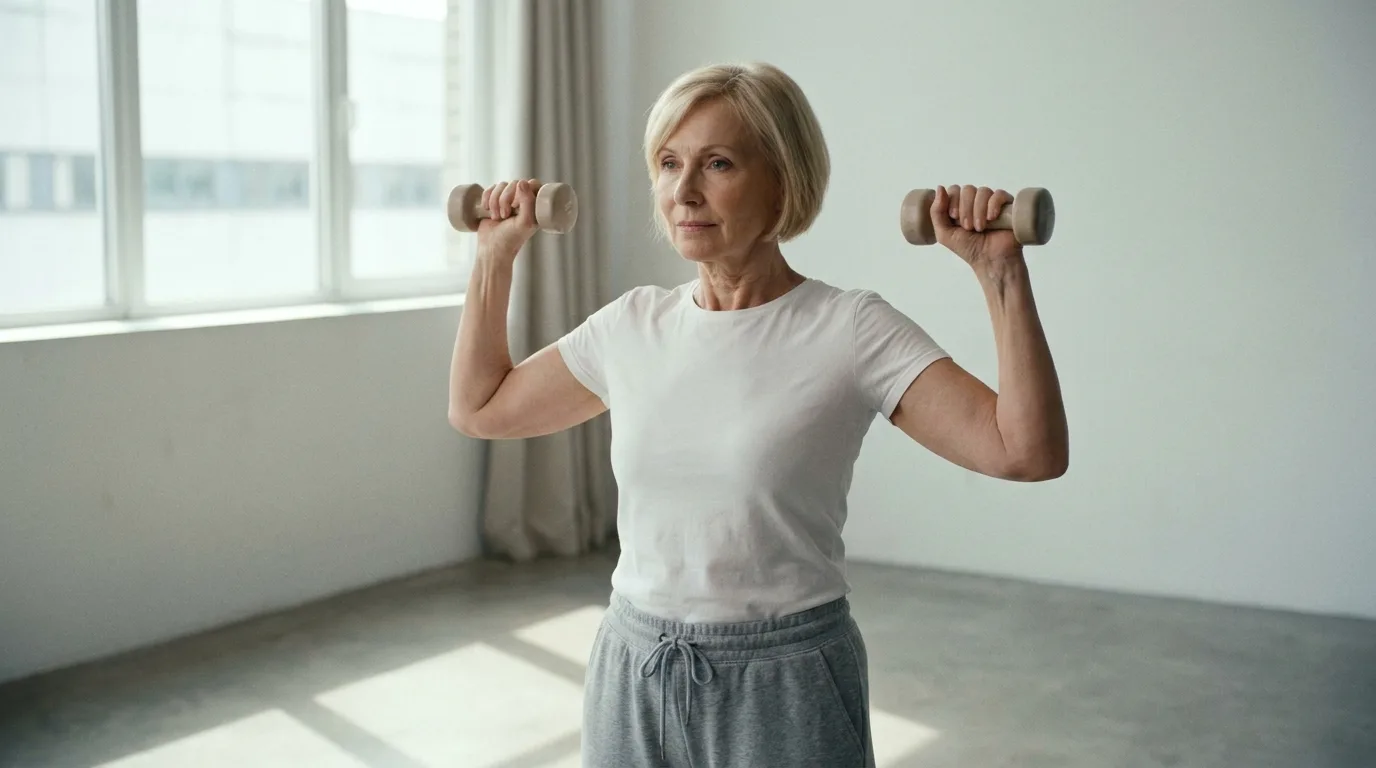
There is a stubborn belief that older adults should stick to light weights and high reps, that strength training past a certain age is risky, and that walking is enough. None of it holds up to the evidence.
Here is the plain answer: progressive resistance training is one of the most effective things you can do to stay strong, mobile and independent as you age, and your body responds to it at the same relative rate it did decades earlier. The real danger is not lifting. It is not lifting.
Key takeaways
1. Progressive resistance training is the most effective way to prevent falls, preserve bone density and maintain independence in later life.
2. Older adults respond to strength training at the same relative rate as younger adults. Age is not the barrier most people assume.
3. The risk of not strength training far outweighs the risk of doing it sensibly.
The evidence is not ambiguous
A 2009 Cochrane review of 121 randomised controlled trials, involving 6,700 participants, concluded that progressive resistance training significantly improves muscle strength, physical function and the ability to perform everyday activities in older adults (Liu and Latham, 2009). These were not marginal gains. The improvements were large and consistent across studies.
A 2019 Cochrane review found that exercise programmes including resistance and balance training reduced falls in older adults by up to 39% (Sherrington et al., 2019).
You are not too old
One of the most quoted findings in exercise science is also one of the most encouraging: older adults respond to resistance training at the same relative rate as younger ones. A 1990 landmark study at Tufts University showed that even adults in their nineties could double or triple their leg strength within eight weeks of structured resistance training (Fiatarone et al., 1990).
In practice, the biggest barrier is rarely physical capacity. It is belief. People arrive convinced their body cannot handle loading, and within a month they are doing things they thought were off the table for good.
What strength training actually means
This does not mean you have to deadlift a heavy barbell. Effective resistance training in later life includes plenty of options:
Bodyweight work. Squats to a chair, push-ups against a wall, step-ups, single-leg balance.
Resistance bands. Excellent for building strength through a full range of motion with controlled load.
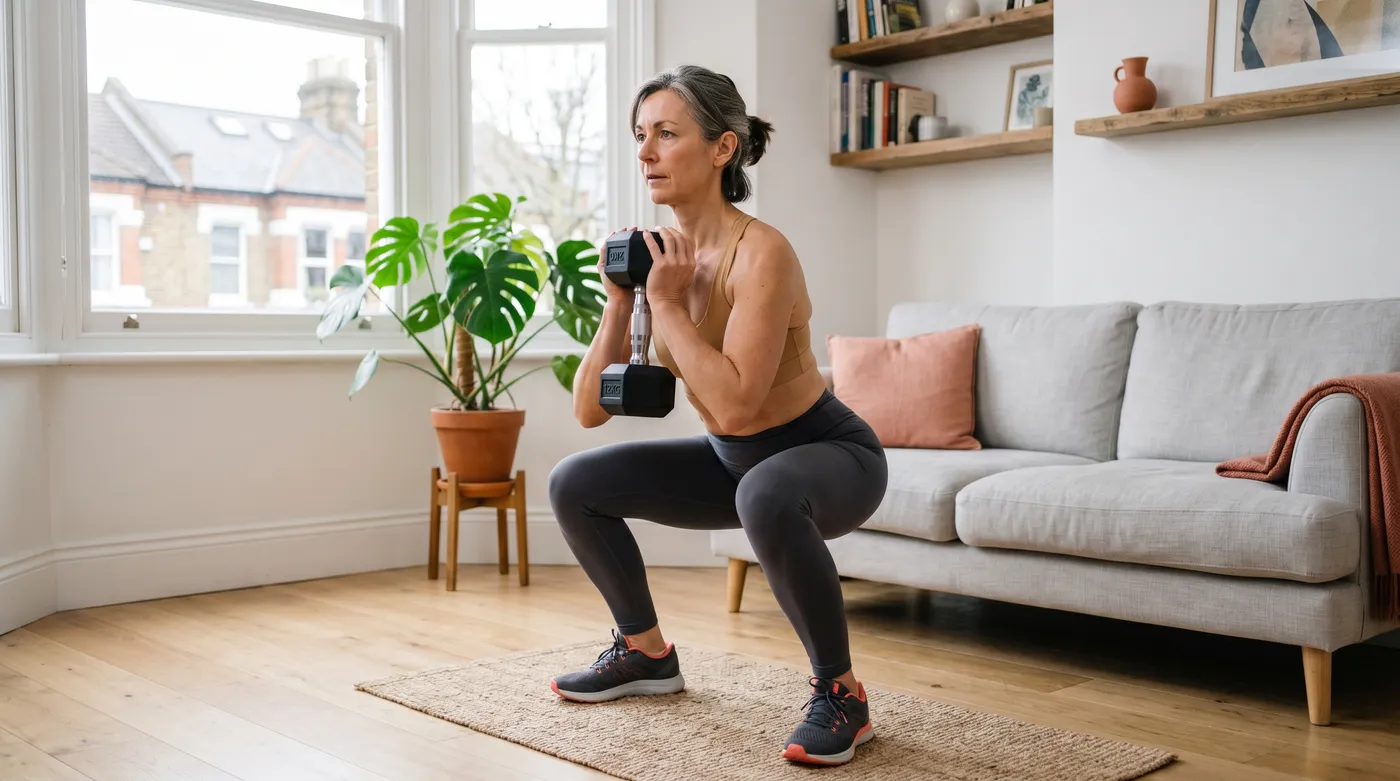
Free weights. Dumbbells and kettlebells, used with good form, are safe and effective.
The principle that ties them together is progressive overload: gradually increasing the challenge over time. That is what drives adaptation. Repeating the same routine at the same intensity for years does very little.
Bone density: the hidden benefit
Osteoporosis affects 1 in 2 women and 1 in 5 men over 50 in the UK. Resistance training is one of the few interventions that can actually increase bone mineral density later in life.
A 2018 study in the Journal of Bone and Mineral Research found that high-intensity resistance training performed twice per week significantly improved bone density at the lumbar spine and femoral neck in postmenopausal women with low bone mass (Watson et al., 2018). For many women, this is one of the strongest reasons to lift.
How Sway approaches this
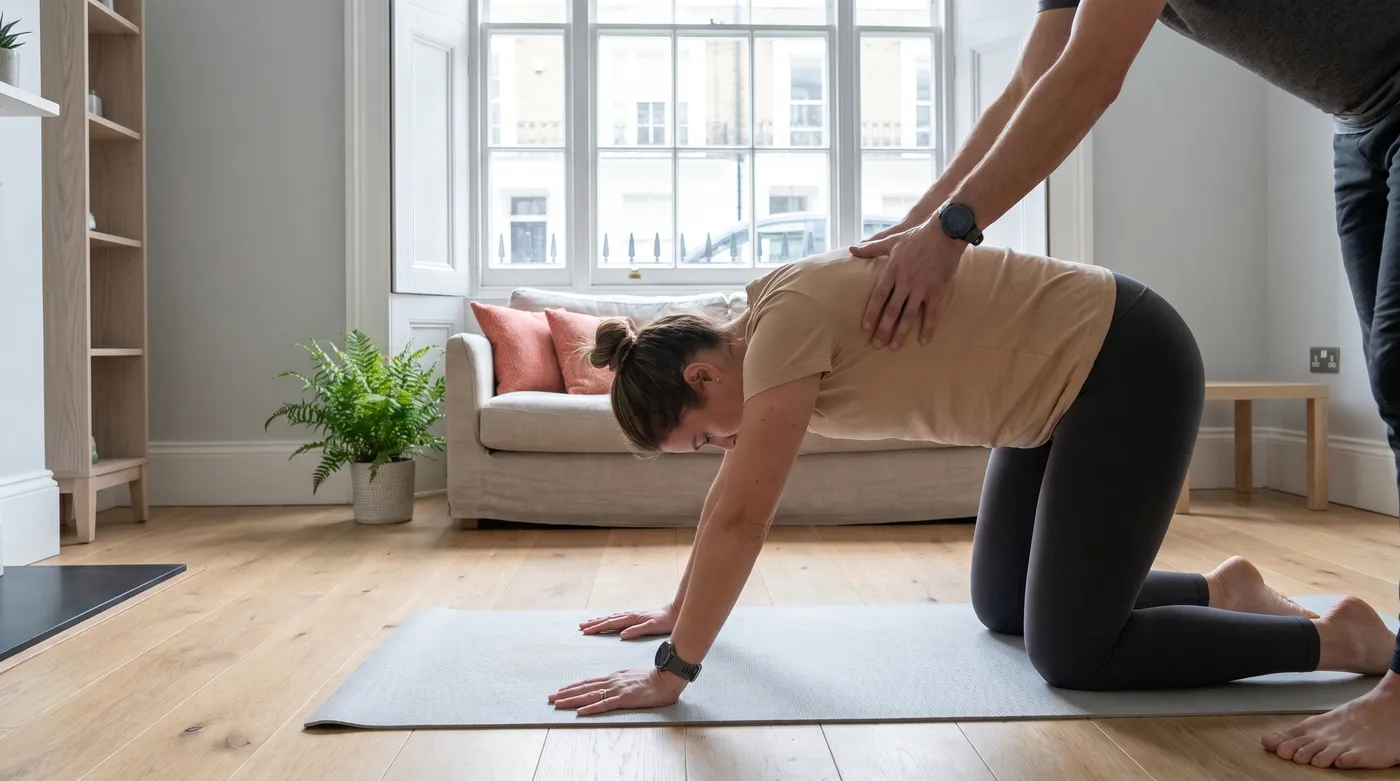
Sway gives you one dedicated coach, qualified in both Pilates and Strength and Conditioning, who works with you in your home across London or live online. Because the same coach assesses how you move, then builds and supervises your programme, the loading is matched to your body rather than dropped on top of restrictions no one checked for.
That continuity matters, because the most common reason people stop training in later life is injury or pain, not lack of motivation. A coach who watches you every week catches the early warning signs and adjusts before a niggle becomes an injury. If you already see a physiotherapist or GP, your coach coordinates with them rather than working blind. And where you need expertise beyond coaching, Sway can introduce you to trusted independent specialists through a vetted referral network. They are not Sway staff, simply people your coach knows and trusts.
What you can do today
If you are not doing any resistance training, start with one movement: the sit-to-stand. Stand up from a chair without using your hands, then lower yourself back down slowly. Repeat 10 times. Do it daily for a week.
When that feels easy, hold a bag of sugar in each hand while you do it. That is progressive overload, and it is the whole idea in miniature.
If you would like a programme built around your body and supervised properly, Sway offers a free initial assessment, online or in your home in London.
References
1. Liu CJ, Latham NK. Progressive resistance strength training for improving physical function in older adults. Cochrane Database of Systematic Reviews. 2009.
2. Sherrington C, et al. Exercise for preventing falls in older people living in the community. Cochrane Database of Systematic Reviews. 2019.
3. Fiatarone MA, et al. High-intensity strength training in nonagenarians. JAMA. 1990.
4. Watson SL, et al. High-intensity resistance and impact training improves bone mineral density. Journal of Bone and Mineral Research. 2018.
Ready to stop guessing?
Book your assessment and meet your coach