← Back to journal
MOVE7 min read2026-04-08
Is walking enough exercise as you get older?
Walking is genuinely good for you. But on its own it will not protect your bones, prevent falls, or hold on to the muscle you need to stay independent. Here is what is missing.
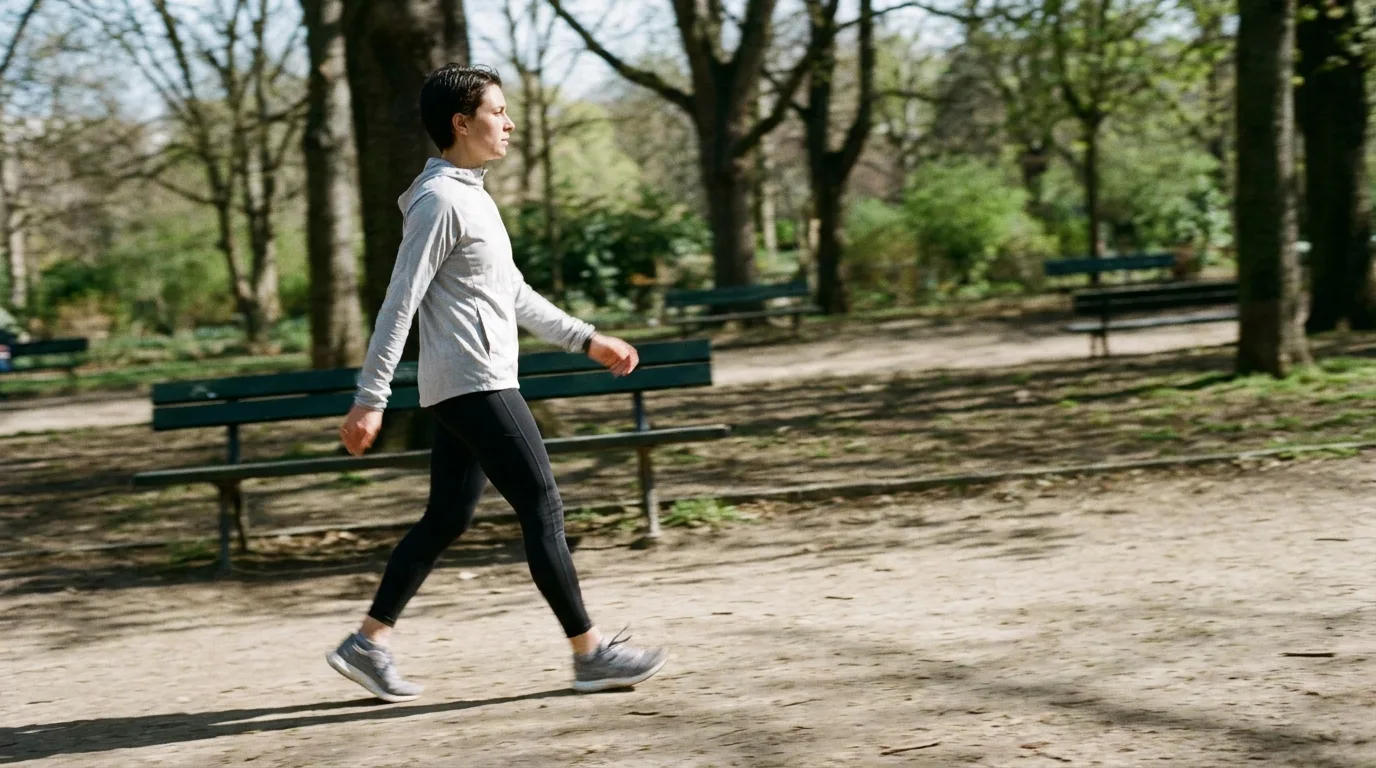
Walking is the most common form of exercise in the UK, and for good reason. It is free, easy to start, and genuinely good for your heart.
But the belief that walking alone is enough to keep you healthy as you age is one of the more costly misconceptions in fitness. The short version: walking is necessary, but it is not sufficient.
Key takeaways
1. Walking does not provide enough stimulus to maintain muscle mass, bone density, or balance as you get older. It is part of the picture, not the whole of it.
2. The NHS and WHO both recommend strength training at least twice a week, alongside aerobic activity like walking.
3. People who only walk tend to lose muscle at much the same rate as those who do nothing. Resistance training is the intervention that reverses this.
Walking is good, but it is not enough
Walking lowers the risk of cardiovascular disease, type 2 diabetes, and some cancers. A 2022 meta-analysis in JAMA Internal Medicine found that 7,000 to 8,000 steps a day was associated with significantly lower all-cause mortality in adults over 60 (Paluch et al., 2022).
That is real and worth protecting. Keep walking.
But walking does not load your muscles hard enough to prevent age-related muscle loss. It does not stress your bones enough to improve their density. And it does not challenge your balance in the ways that meaningfully reduce fall risk.
A 2015 study in the Journal of the American Geriatrics Society found that walking programmes on their own did not reduce fall rates in older adults. Only programmes that included strength and balance training achieved significant reductions (El-Khoury et al., 2015).
The muscle problem
From around 30, adults lose roughly 3 to 8 per cent of their muscle mass per decade, and the rate climbs later in life. Walking does not slow this.
A 2017 review in the Journal of Physiology examined activity patterns in older adults and found that while walking improves cardiovascular function, it does not provide enough mechanical loading to prevent age-related muscle loss (Harridge and Lazarus, 2017).
It is a pattern Sway's coaches see often: people who have walked thousands of steps a day for years, with healthy hearts to show for it, who still struggle to get up off the floor without help. The walking did one job well. It was never going to do the other.
The bone problem
Osteoporosis affects around 3 million people in the UK. Walking offers some bone loading, but not enough to meaningfully improve density at the spine and hip, the sites most vulnerable to fracture.
The Royal Osteoporosis Society recommends impact exercise, such as jumping and hopping where appropriate, and resistance training for bone health. Walking is classed as low-impact and is not sufficient on its own for protecting bone (Royal Osteoporosis Society, 2019).
The balance problem
Walking is a repetitive, forward-moving activity. It does little to challenge sideways stability, single-leg balance, or the inner-ear and body-awareness systems that keep you upright when you stumble.
Falls are the leading cause of injury-related death in adults over 75 in the UK. The exercises that prevent them are not walking. They are strength work, balance work, and controlled movement such as Pilates.
What to add
The guidance is consistent. Most adults need three kinds of activity:
Aerobic activity. Walking counts. Aim for around 150 minutes a week.
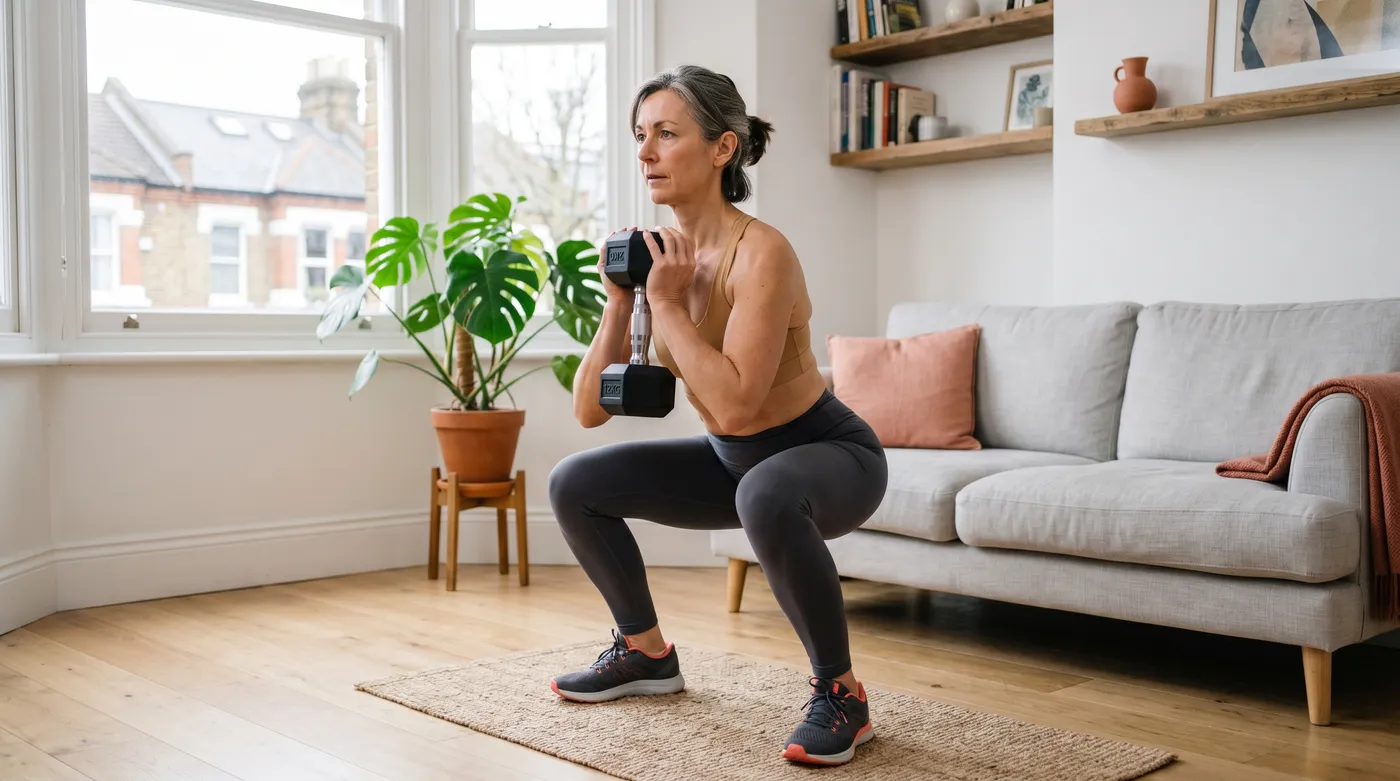
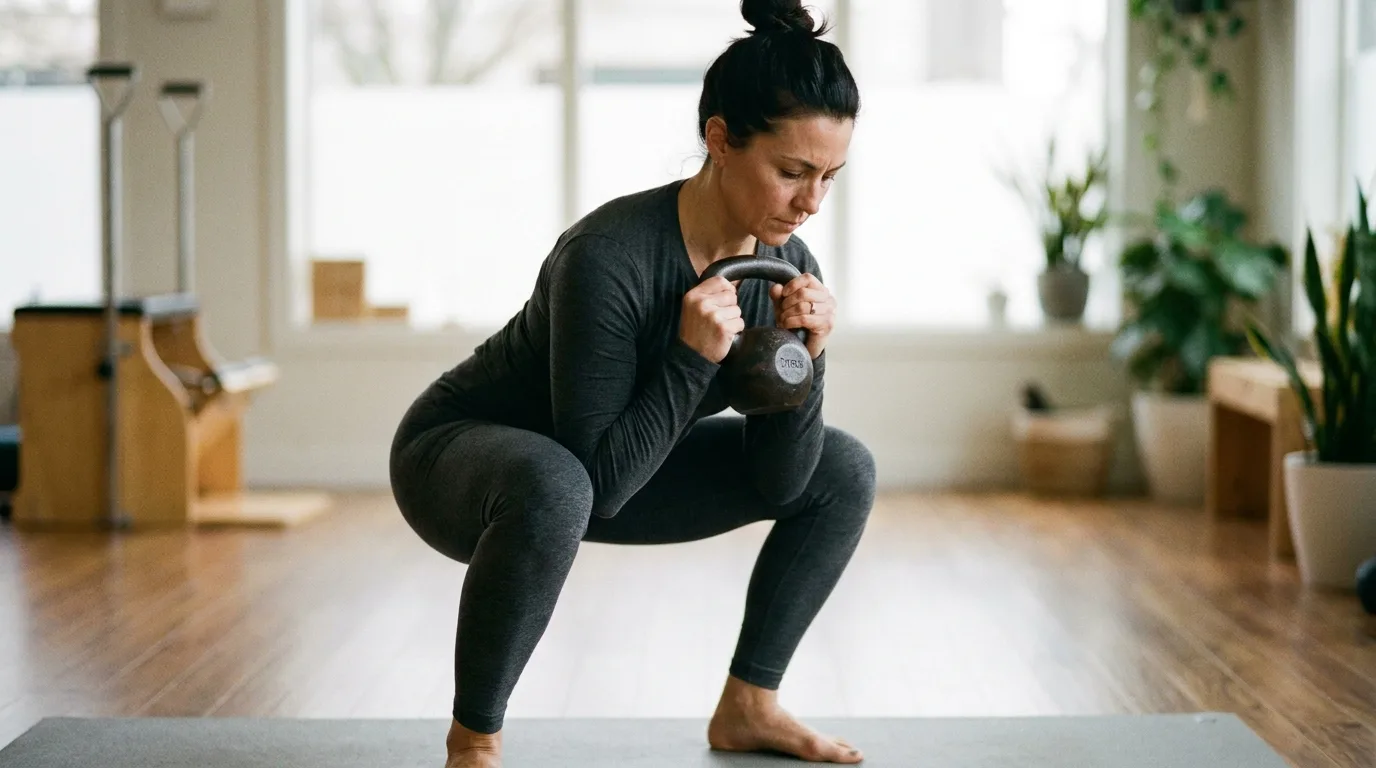
Strength training. Twice a week at minimum, using resistance bands, dumbbells, bodyweight, or machines, with the load increasing gradually over time.
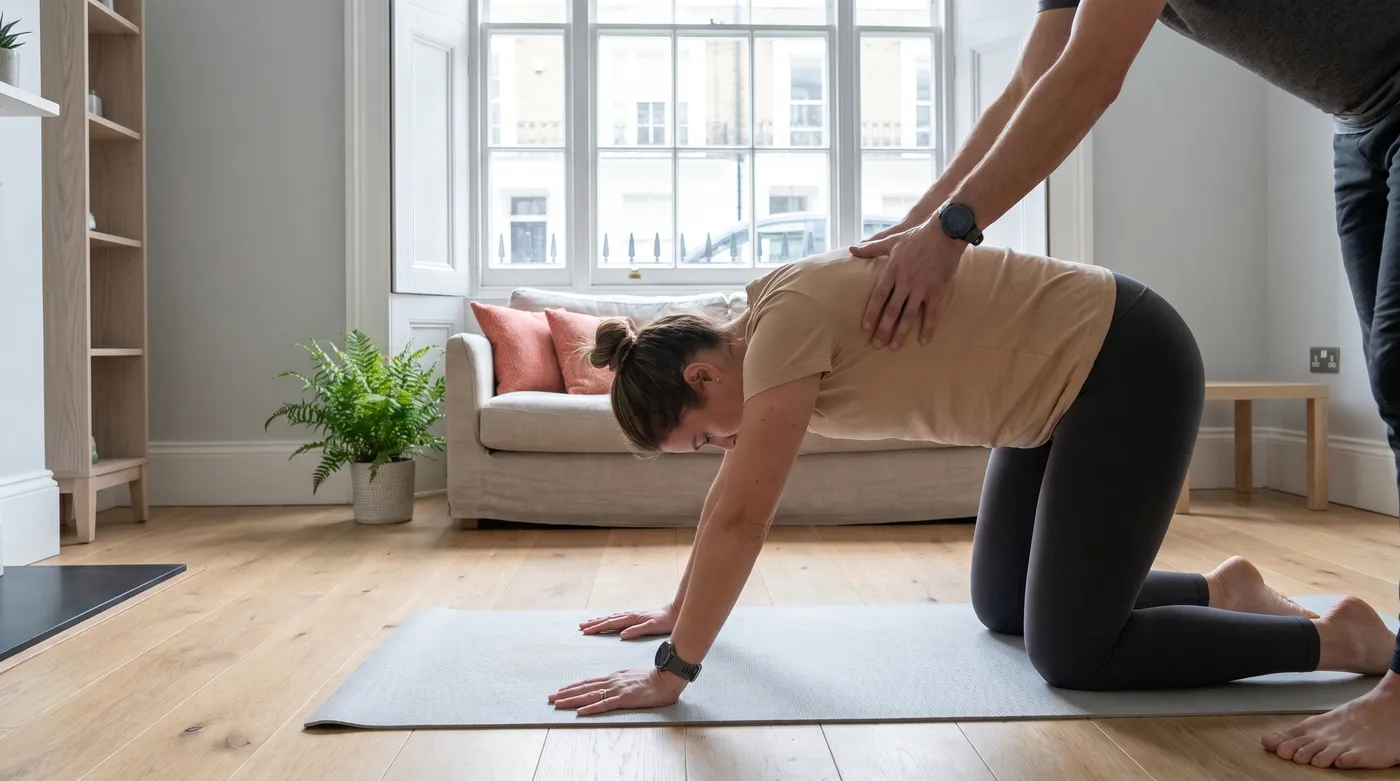
Balance and mobility work. Pilates, or specific balance exercises, at least twice a week.
This is not a fringe opinion. It is the substance of the NHS and WHO physical activity guidelines.
How Sway approaches this
Many of the people Sway works with arrive as walkers. They are active and healthy in plenty of ways, but quietly losing muscle and balance without realising it.
Nobody is told to stop walking. Sway simply adds what is missing. Sway is in-home and online personal training in London, a team of coaches qualified in both Pilates and Strength, with more than 35,000 sessions delivered since 2018. Because your coach is qualified in both Pilates and Strength and Conditioning, the resistance work, the balance work, and the movement quality all come from one person who programmes them around your walking rather than competing with it. Sessions take place in your home across London or live online, wherever you are.
The walking stays. The gaps get filled.
What you can do today
Keep walking, and add one quick check: the sit-to-stand test. Stand up from a chair without using your hands, then sit back down slowly. Repeat as many times as you can in 30 seconds.
If you manage fewer than twelve, your lower-body strength is below the threshold associated with comfortable independent living later in life. That is not cause for alarm. It is simply a good reason to start adding strength work, and a free assessment, online or in your home in London, is an easy place to begin.
References
1. Paluch AE, et al. Daily steps and all-cause mortality. JAMA Internal Medicine. 2022.
2. El-Khoury F, et al. The effect of fall prevention exercise programmes on fall induced injuries. JAGS. 2015.
3. Harridge SDR, Lazarus NR. Physical activity, aging, and physiological function. Journal of Physiology. 2017.
4. Royal Osteoporosis Society. Strong Steady Straight clinical guidelines. 2019.
Ready to stop guessing?
Book your assessment and meet your coach