← Back to journal
MOVE7 min read2026-04-11
Is Pilates enough on its own, or do you need strength training too?
Pilates builds control and mobility. Strength training builds bone and muscle. For most people, the honest answer is that you need both, in a ratio that fits your body.
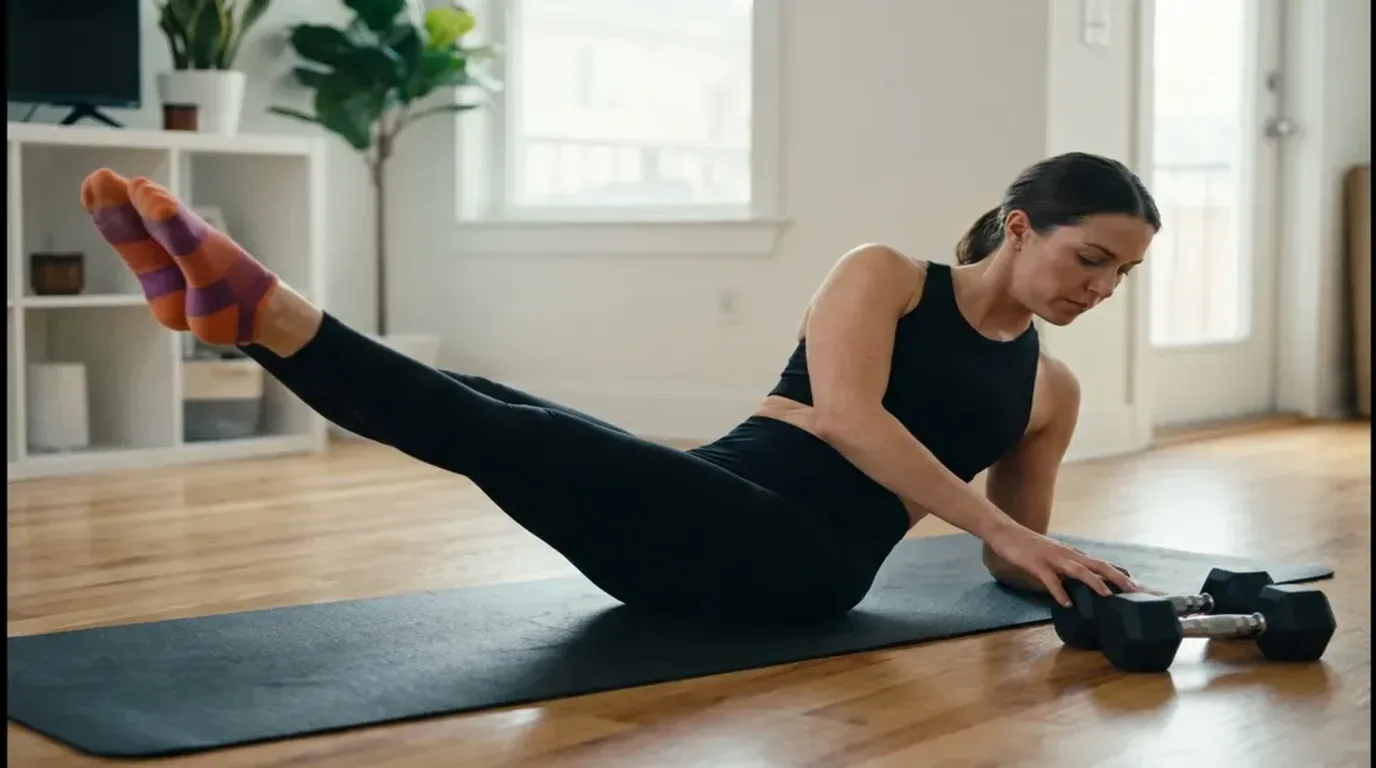
It is one of the most asked questions in fitness right now. Reformer Pilates is booming. Strength training has more evidence behind it than ever. And most people are doing one or the other, rarely both.
The honest answer: for most people who want to stay strong and capable as they age, you need both. What changes is the ratio, and that depends on your body, not your birthday.
Key takeaways
1. Pilates builds core stability, mobility, and movement control. On its own it does not provide enough mechanical load for meaningful bone density or muscle growth.
2. Strength training is the most effective way to preserve muscle mass and bone density as you get older. But load a body that moves poorly and you raise the risk of injury.
3. Combined and well sequenced, Pilates and Strength training produce better results than either alone.
What Pilates does well
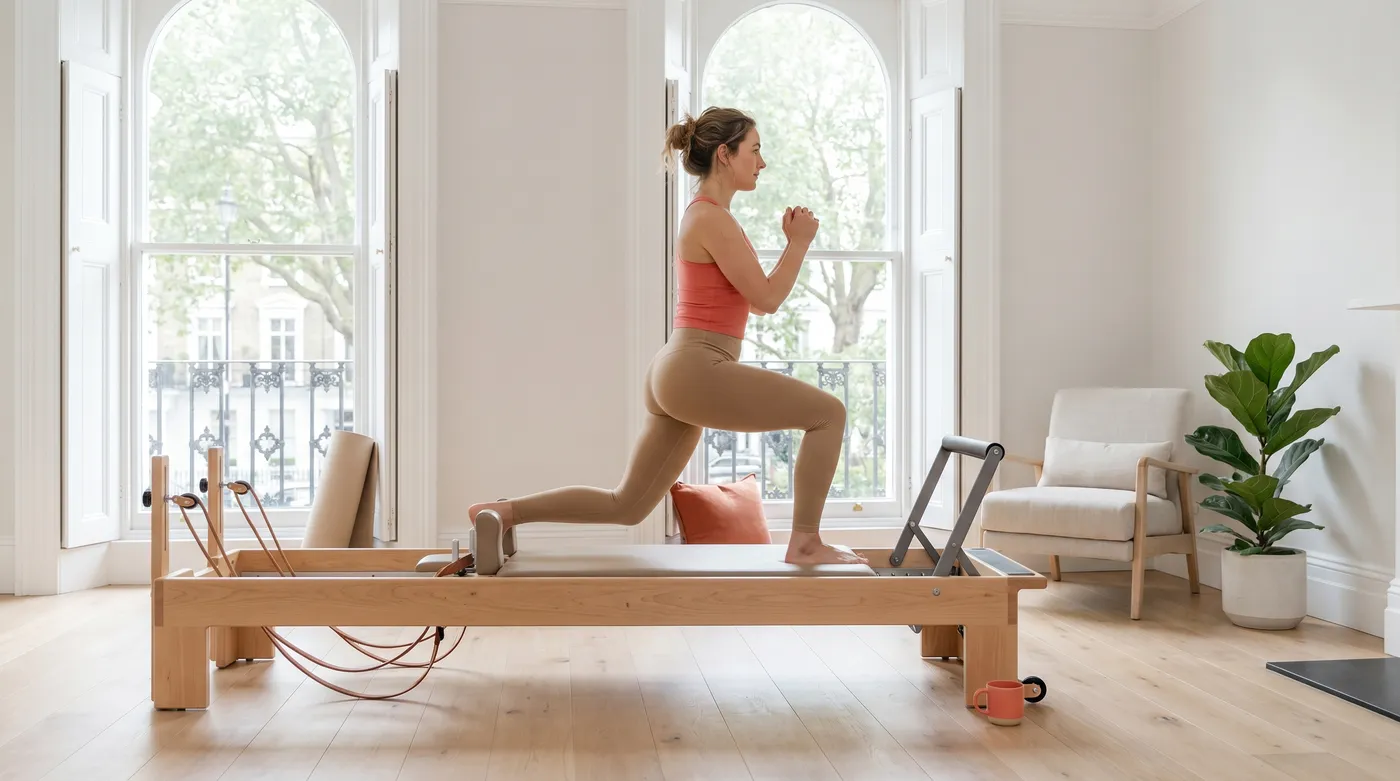
Pilates is exceptional at controlled, precise movement. It trains the deep stabilising muscles that support your spine and pelvis, and it sharpens posture, balance, and body awareness.
Those are not minor benefits. Better balance lowers fall risk. Better body awareness reduces the chance of moving in ways that hurt you. A more stable spine often means less back pain.
A 2019 systematic review in the Journal of Bodywork and Movement Therapies found that Pilates significantly improved balance, functional mobility, and fall risk in older adults (Bueno de Souza et al., 2019).
As Sway's head coach puts it: Pilates teaches you how to move. But it does not, on its own, teach your bones to get denser or your muscles to get noticeably bigger. Those adaptations need a different kind of stimulus.
What Pilates does not do
Pilates does not deliver enough mechanical load to drive bone growth or significant muscle gain. The resistance from a reformer spring is far lower than the load of a weighted squat or a deadlift.
The research is consistent here: Pilates improves functional fitness and movement quality, but resistance training is what meaningfully shifts bone mineral density and lean muscle mass. A 2018 study in the Journal of Bone and Mineral Research confirmed this in postmenopausal women (Watson et al., 2018).
This matters because osteoporosis affects 1 in 2 women and 1 in 5 men over 50 in the UK, and age-related muscle loss is one of the strongest predictors of losing your independence later in life.
What strength training does well
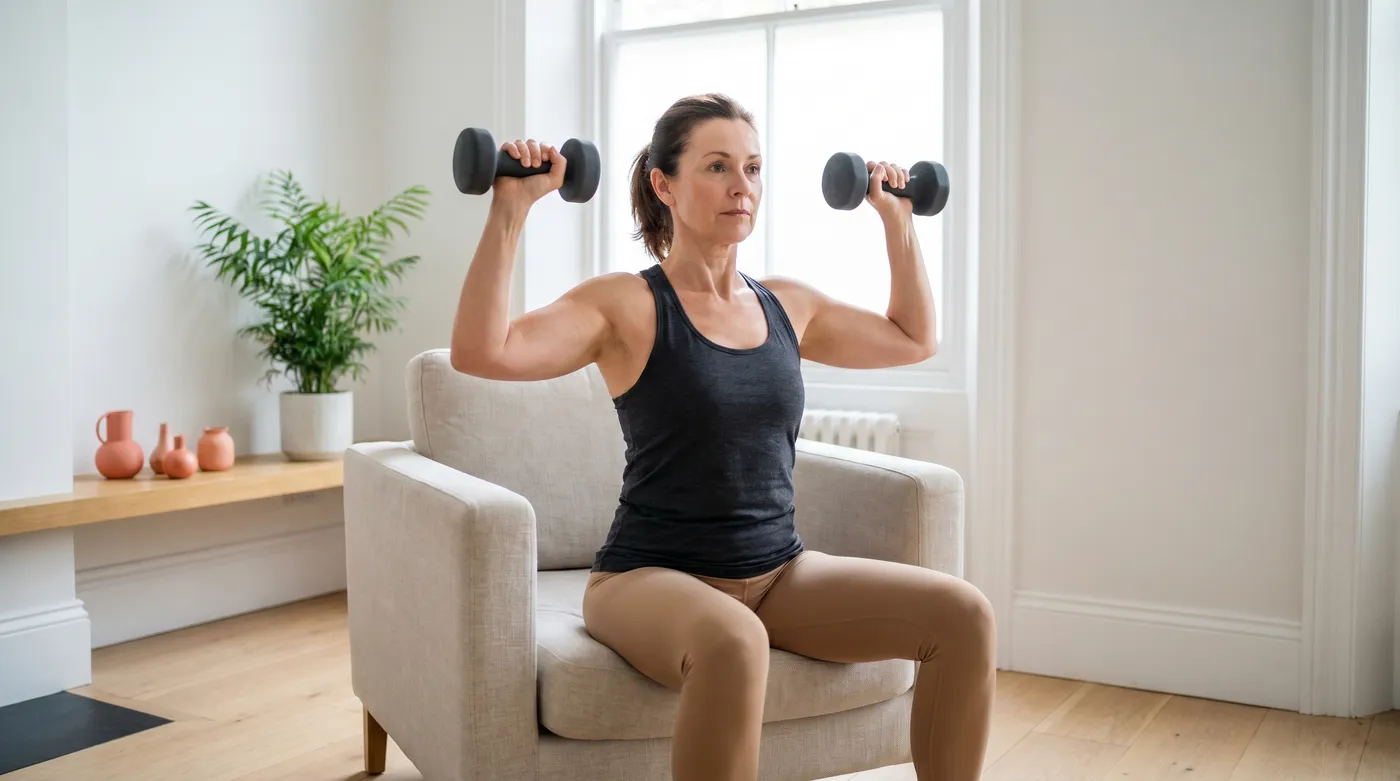
Strength training is the most evidence-backed way to hold on to muscle mass, bone density, and everyday physical capacity as you age.
That same 2018 study found that high-intensity resistance training twice a week significantly improved bone density at the lumbar spine and femoral neck in postmenopausal women (Watson et al., 2018).
A 2009 Cochrane review of 121 trials confirmed that progressive resistance training improves strength, physical function, and the ability to perform daily activities in older adults (Liu and Latham, 2009).
What strength training does not do
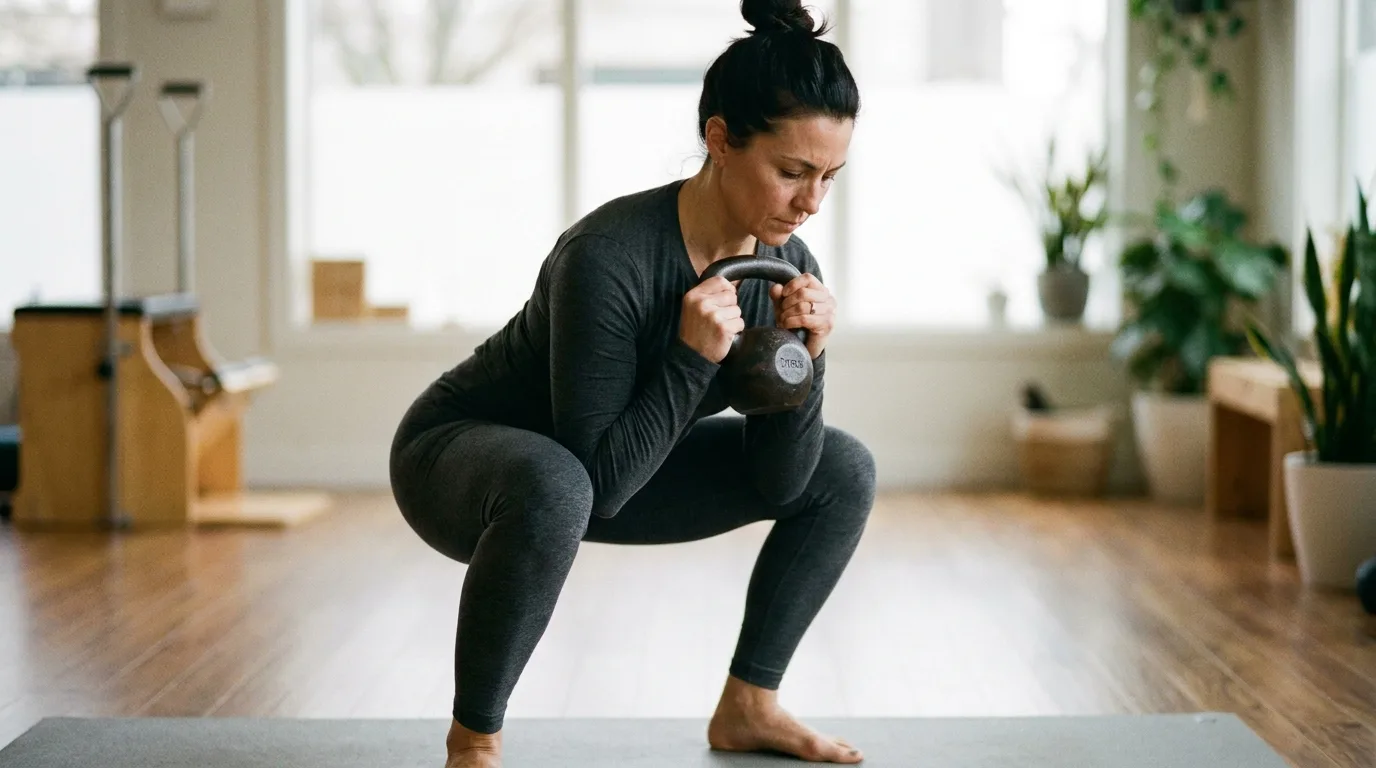
Strength training alone does not fix mobility restrictions, movement quality, or deep core control. Load a body that moves badly and you reinforce poor patterns and raise injury risk.
Plenty of people who lift without any mobility work end up stiff, tight, and eventually hurt. The strength is there; the control to use it safely is not.
The answer for most people
You need both. The only real question is the ratio.
If you have significant mobility restrictions, persistent pain, or shaky balance, you might start with more Pilates and less loading. As your movement improves, the balance tips.
If you already move well, a single Pilates session a week alongside two or three strength sessions may be plenty.
The two disciplines complement each other when they are sequenced by the same mind. When your warm-up and mobility are already being handled by your Pilates work, your Strength sessions can spend less time preparing and more time actually loading.
How Sway approaches this
This is exactly why Sway is built around one coach rather than separate teachers who never speak.
Sway is in-home and online personal training in London, a team of coaches qualified in both Pilates and Strength, with more than 35,000 sessions delivered since 2018. Your coach is qualified in both Pilates and Strength and Conditioning. That means the same person who teaches you control on the mat or reformer is the one programming your squats and deadlifts, and adjusting the ratio as your body changes.
If a mobility restriction shows up, the Pilates work addresses it; once it clears, the loading progresses. There is no handover, no contradiction, no carrying notes between practitioners. Sessions happen in your home across London, or live online wherever you are.
What you can do today
If you only do Pilates, try a quick test: can you stand up from the floor without using your hands? Can you carry two heavy bags up a flight of stairs without stopping? If those are hard, your body needs more load than Pilates provides.
If you only lift, stand on one leg with your eyes closed. If you cannot hold it for fifteen seconds, your balance and body awareness need work, and that is where Pilates earns its place.
If you are not sure where you sit, a free assessment, online or in your home in London, will give you an honest read on the ratio that suits you now.
References
1. Bueno de Souza RO, et al. Pilates for elderly: a systematic review. Journal of Bodywork and Movement Therapies. 2019.
2. Watson SL, et al. High-intensity resistance and impact training improves bone mineral density. Journal of Bone and Mineral Research. 2018.
3. Liu CJ, Latham NK. Progressive resistance strength training for improving physical function in older adults. Cochrane Database. 2009.
Ready to stop guessing?
Book your assessment and meet your coach