← Back to journal
MOVE6 min read2026-04-09
Recovery is not rest: what therapeutic massage actually does
Massage is not a holiday treat. It is a recovery tool with measurable effects on inflammation, sleep and how well you respond to training.
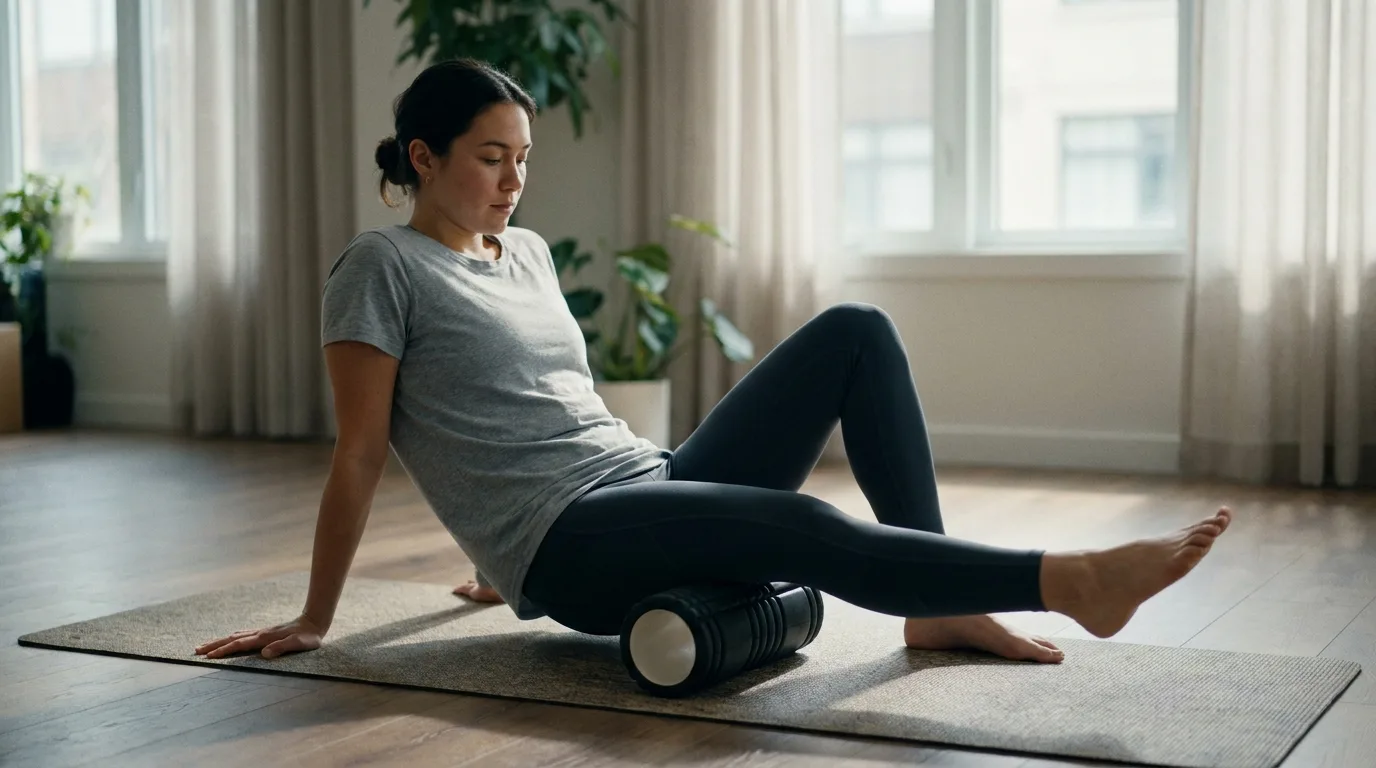
Most people file massage under treats. Something you book on holiday, or give as a gift. Not something that belongs in a serious training programme.
The research disagrees. Therapeutic massage has measurable effects on inflammation, muscle recovery, sleep quality and the nervous system. Used well, it is a recovery tool, not a luxury.
Key takeaways
1. A single massage session reduces inflammatory signalling (the NF-kB pathway) and helps damaged muscle recover.
2. Regular massage has been shown to improve sleep quality in older adults by around 28%.
3. Massage works best when it is timed around your training rather than booked at random.
What massage actually does at the tissue level
A 2012 study at McMaster University took muscle biopsies to see what happens at the cellular level during massage. They found that massage reduced activity in the inflammatory signalling pathway NF-kB and promoted mitochondrial biogenesis. In plain terms: it told the cells to calm inflammation and produce more energy (Crane et al., 2012).
This is not a placebo. These are measurable changes in the tissue itself.
Sleep and the nervous system
Chronic muscle tension keeps the sympathetic nervous system switched on, the fight-or-flight state. When your shoulders, jaw and lower back are permanently tight, your body sits in a low-grade stress response without you noticing.
Massage nudges you the other way, into the parasympathetic state. Heart rate settles. Cortisol drops. The body shifts into recovery mode.
A 2019 meta-analysis in the Journal of Clinical Nursing found that massage therapy improved sleep quality in older adults by 28%, measured with the Pittsburgh Sleep Quality Index (Siu et al., 2019).
That link between releasing held tension and sleeping better is one of the most consistent things clients report. When you let go of chronic tightness, you remove one of the barriers to deep sleep.
How Sway approaches recovery
Sway is in-home and online personal training in London, built around one dedicated coach who is qualified in both Pilates and Strength and Conditioning. Your coach programmes your training and understands recovery and rehab principles, so the work is designed as a whole rather than in pieces. If your coach has loaded your legs hard early in the week, the recovery work later in the week reflects that.
Massage itself sits within a vetted external referral network. We do not employ massage therapists in-house. Instead, your coach can introduce you to a trusted independent therapist when it would genuinely help, and the two coordinate around what your body has been doing rather than working in silos. If you already have a massage therapist you like, your coach works with that, not around it. That loop is what turns massage from a pleasant hour into part of a recovery plan.
What you can do today
Notice where you carry tension when you wake. Jaw, neck, shoulders, lower back. If the same spots are tight every morning, that is rarely a local muscle problem. It is usually a nervous system pattern.
A tennis ball pressed against a wall into the tight area for 60 seconds, with slow breathing, is a simple way to start shifting toward that parasympathetic state at home.
If you would like a clearer picture of where your tension and recovery are letting you down, a free assessment, online or in your home in London, is a good place to begin.
Ready to stop guessing?
Book your assessment and meet your coach